Blog

  • Top 5 Pickup Trucks for Small Business Owners

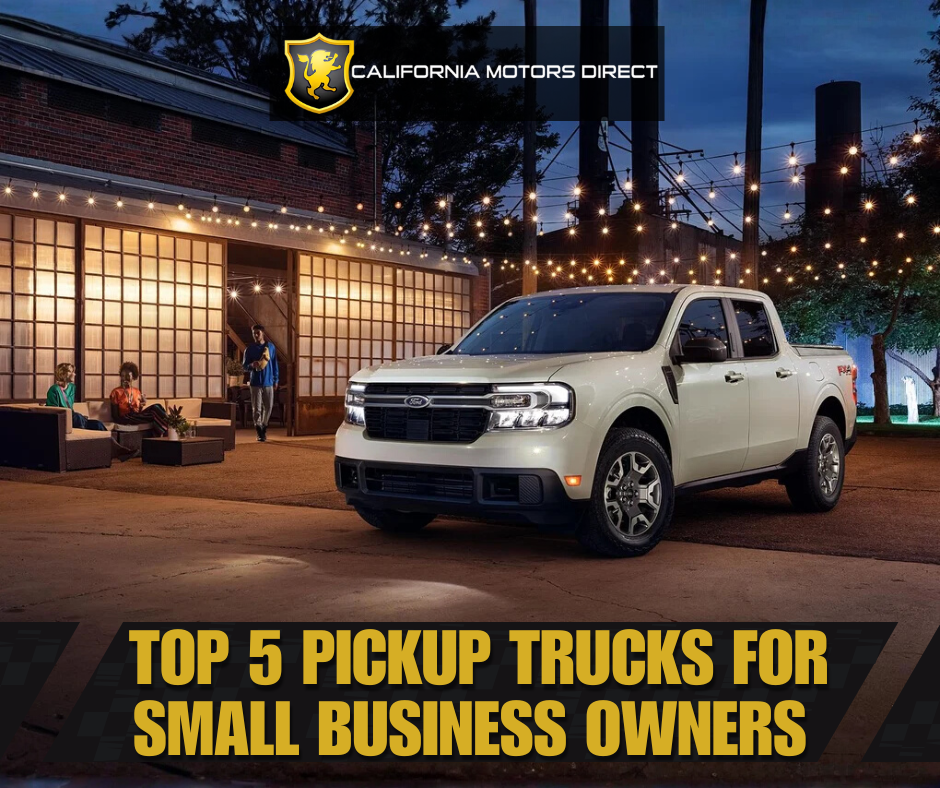
    Blog title page with a white ford truck under strings of lights and 3 people sitting near the warehouse

    If you’re a contractor or small business owner in Southern California, your truck isn’t just a way to get from job to job. It’s your rolling toolbox, mobile office, and often your biggest business asset after your tools and equipment.

    With used truck prices still high and California’s regulations tightening, picking the right used pickup matters more than ever.

    Before choosing a brand or badge, focus on what the truck has to do every single week in SoCal conditions.

    Key Things to Consider:

    1. Payload (what you carry):

    Tools, lumber, tile, compressors, ladders, pipe, generators, racks—weight adds up quickly.

    • Light trades: look for at least ~1,200–1,500 lbs of payload.
    • Heavy trades (concrete, framing, hardscaping, larger trailers): aim for 2,000+ lbs.

    2. Towing (what you pull):

    • Small utility/landscape trailer: ~3,500–5,000 lbs
    • Enclosed tool trailer or small skid steer: ~5,000–8,000 lbs
    • Larger equipment / heavy trailers: 10,000+ lbs

    3. Urban Maneuverability:

    • Working in downtown LA, Santa Ana, Anaheim, or Long Beach—where parking can be tight—a midsize SUV or a shorter-wheelbase full-size vehicle may be a better fit.
    • In the Inland Empire and OC suburbs, where there’s more space, full-size or heavy-duty vehicles are much more compatible.

    4. Fuel & Reliability:

    Traffic is brutal. You want something that won’t live at the pump or in the shop.

    Before you fall in love with a cheap heavy-duty diesel, you need to know what California allows—and what it doesn’t.

    • CARB Truck & Bus Regulation: Heavy-duty diesel vehicles over 14,000 lb GVWR must meet strict emissions rules. Non-compliant older diesels can’t be registered with DMV as of 2020.
    • Gas & under-14k GVWR trucks: Currently exempt from that specific CARB Truck & Bus rule.

    For most small contractors and businesses, staying with light-duty pickups (half-ton, ¾-ton gas, 1-ton gas) is simpler and avoids most of that headache.

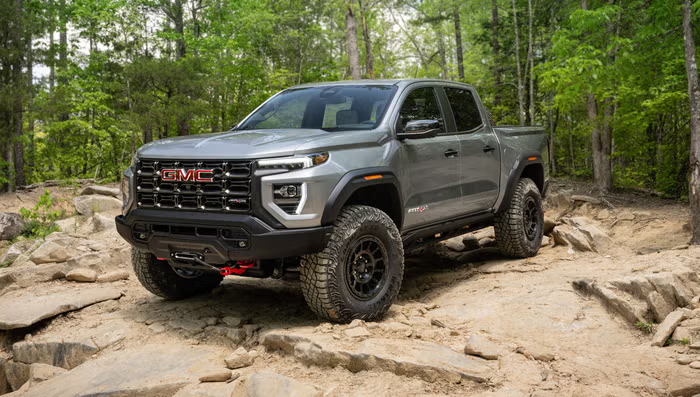
    a grey GMC midsize truck parking in a forest
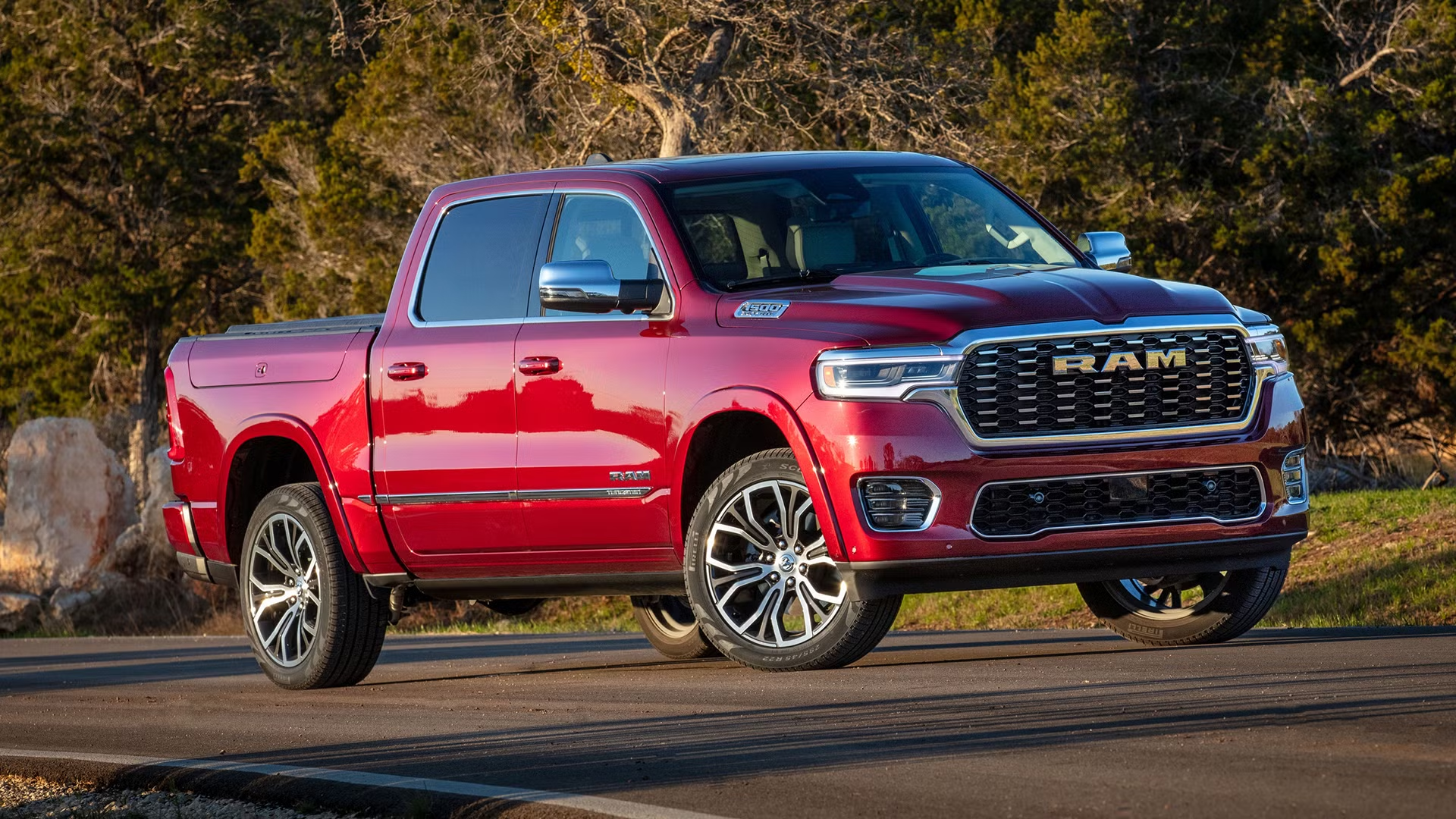
    a red RAM half-ton truck parking on a mountain road with sun shining down from above
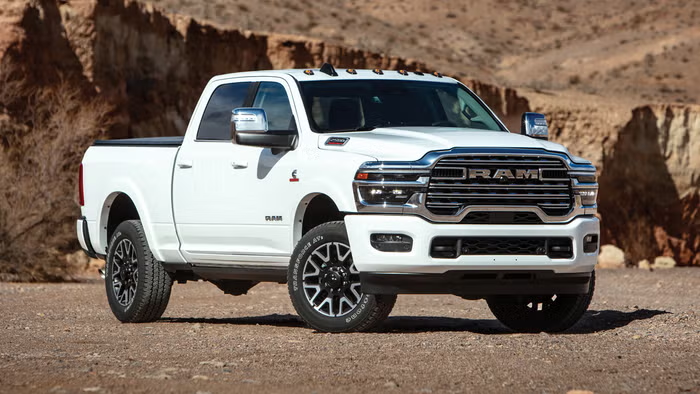
    a red white RAM heavy-duty truck parking in the desert

    Best for: Light-duty work, mobile services, tight city areas.

    • Easier to park in LA/OC traffic and neighborhoods.
    • Better fuel economy.
    • Lower ownership cost.

    Best for: Most contractors and small businesses.

    • Strong towing (8,000–13,000 lbs).
    • Higher payload for lumber, tools, and equipment.
    • Bigger beds (6.5–8 ft) for materials.
    • Comfortabledaily driving + crew transport.

    Best for: Businesses towing heavy equipment or large trailers every day.

    • Maximum towing (12,000–20,000+ lbs depending on configuration).
    • Stronger frames, brakes, and suspensions.
    • Handles heavy pallets, machinery, and multi-axle trailers.

    Limitations:

    • Not ideal for heavy materials.
    • Lower towing capacity (approx. 3,500–6,800 lbs).

    Limitations:

    • Fuel cost is higher than midsize.
    • Specs vary a lot by engine/axle; you must check payload/tow ratings for the specific truck.

    Limitations:

    • Higher fuel and maintenance cost.
    • Large size can be difficult in busy SoCal cities.
    • Overkill for light and medium-duty trades.

    Below are practical, work-focused picks—not just “nice to have” trucks, but models that make sense in SoCal’s real-world conditions.

    1. FORD F-150 (2015-2020): The All-Around Workhorse
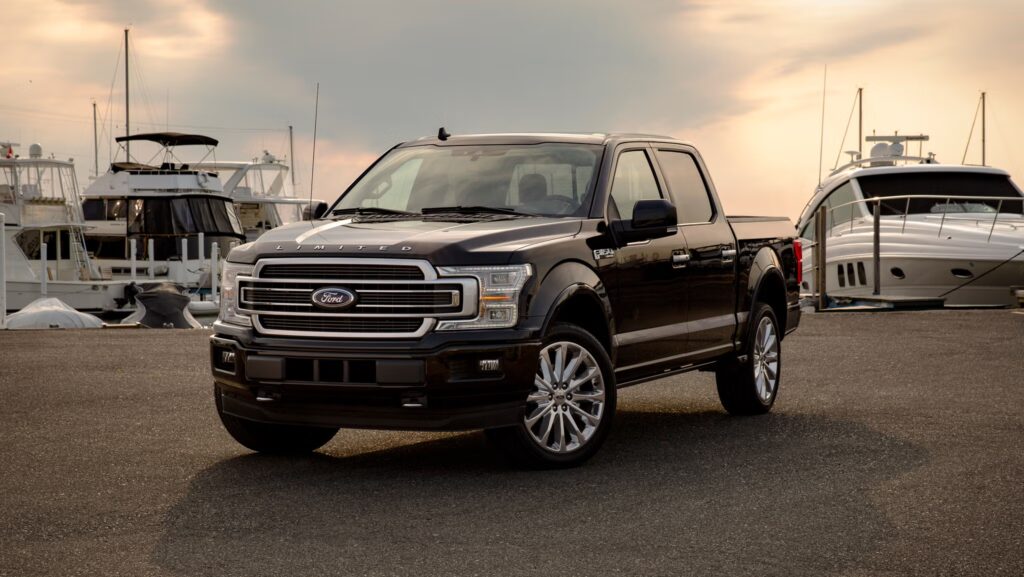
    a black 2020 Ford F-150 parking near a dock with boats behind

    The Ford F-150 is the best-selling truck in the U.S. for a reason. For contractors, it delivers a sweet spot between capability, comfort, and availability on the used market. If you want “one truck that can do almost everything” in SoCal, a carefully chosen used F-150 is hard to beat.

    Ford’s 13th-gen F-150 (2015–2020) is especially strong:

    • Max towing: up to about 13,200 lbs when properly equipped (3.5L EcoBoost + Max Trailer Tow).
    • Max payload: up to about 3,270 lbs in specific regular-cab, HD Payload Package configurations.
    • Aluminum body (2015+) helps resist rust—a plus for coastal SoCal.

    Why it works for contractors & small businesses:

    The F-150 gives you flexibility. It can be spec’d as a bare-bones work truck or a crew-cab mobile office. There’s a huge used supply in SoCal, so you can shop around for the right combo of bed length, cab, and engine.

    What to watch out for:

    Payload varies widely; a nicely optioned 4×4 crew cab may only have ~1,500–1,800 lbs of payload. Always check the tire & loading sticker in the door jamb for the exact payload rating.

    2. TOYOTA TUNDRA (2014-2021): Long-Term Reliability King
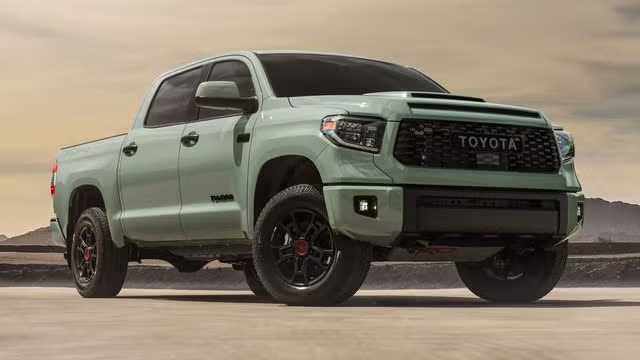
    a mint 2021 Toyota Tundra in driving in the desert

    If your priority is “buy it, maintain it, and keep it forever”, the Toyota Tundra is hard to beat.

    • Max tow rating: up to around 10,500 lbs depending on configuration.
    • Even lower-spec Tundras can usually tow 6,800+ lbs—plenty for many trailers.
    • Strong resale value thanks to Toyota’s reputation

    Why it works for contractors & small businesses:

    Many Tundras routinely reach 150,000–250,000 miles, with plenty surpassing 300,000 miles when properly maintained—an important advantage for businesses that prioritize reliability over fuel economy. The Tundra is widely regarded as one of the most dependable half-ton trucks on the market. Its simple, proven 5.7L V8 further enhances long-term durability, offering far less complexity than many turbocharged competitors.

    What to watch out for:

    Fuel economy remains a weakness, and operating costs will generally be higher than those of an F-150 EcoBoost or Silverado V6.

    3. TOYOTA TACOMA (2016-2023): Small Business Hero
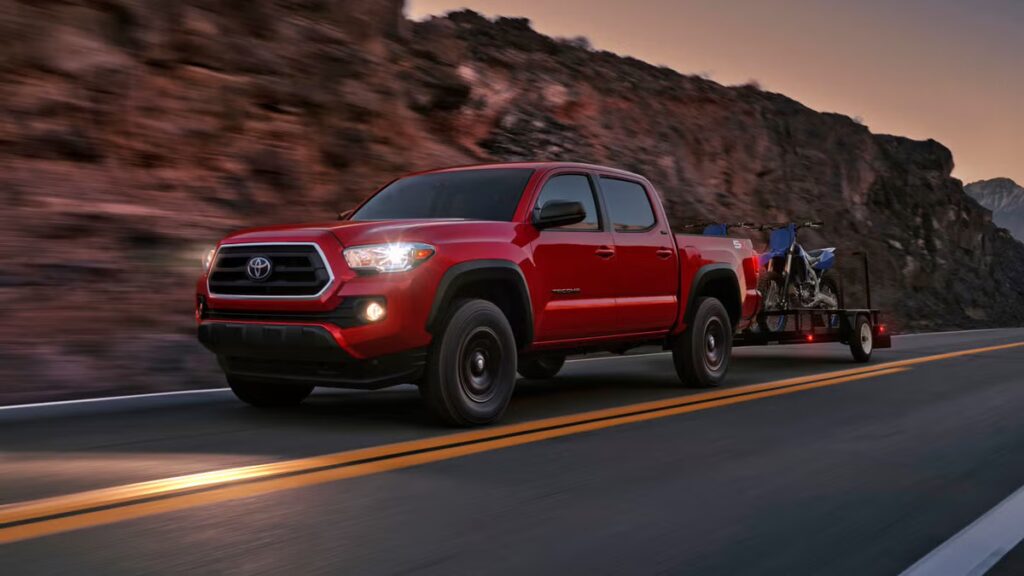
    a red 2023 Toyota Tacoma driving near a mountain pulling two bikes behind at sunset.

    The Tacoma is the king of midsize trucks, and for many small businesses in SoCal, it’s all the truck they’ll ever need. If your jobs don’t require heavy equipment but you need a dependable, maneuverable work truck, the Tacoma is a strong, low-risk choice.

    • Towing (3rd-gen Tacoma): up to about 6,800 lbs when properly equipped.
    • Payload: up to roughly 1,400–1,440 lbs in the right configuration.
    • Resale value: 2019 Tacoma has won KBB’s Best Midsize Pickup and holds over 80% of its value after 3 years, making it one of the best resale vehicles in the U.S.

    Why it works for contractors & small businesses:

    Tacomas are easier to park, cheaper to fuel than full-size V8s, and insanely popular in SoCal. For mobile services and light trades, they do the job without overkill.

    What to watch out for:

    It’s not the best choice for very heavy loads or big trailers; if you’re frequently pushing payload or towing limits, a full-size truck is the smarter move. Rear-seat space can also be limited in some cab styles, making it less comfortable for crews you transport often.

    4. CHEVROLET SILVERADO 1500 / GMC SIERRA 1500 (2014-2020): Value Full-Size
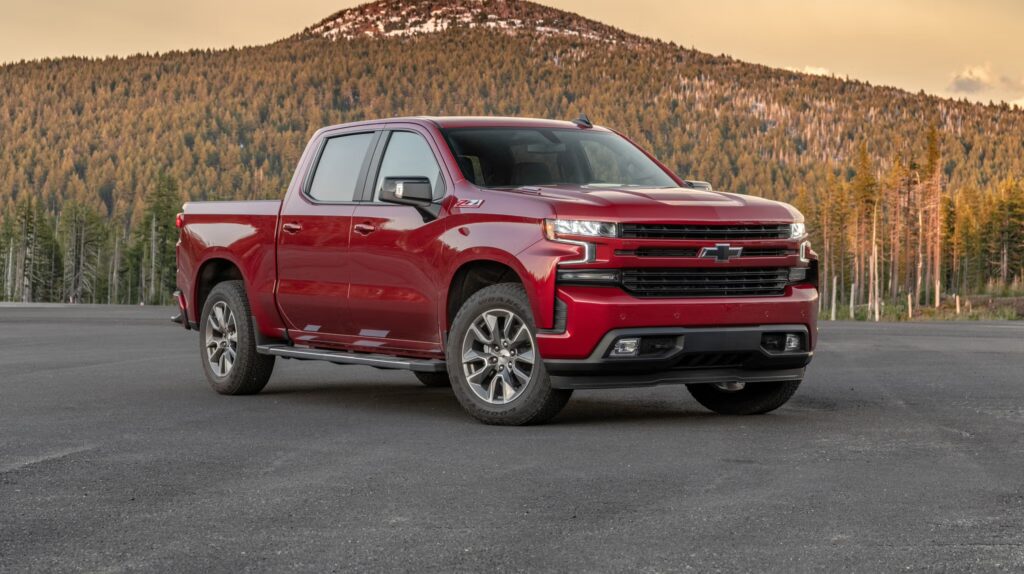
    red 2020 Chevy Silverado 1500 parking in front a a mountain

    The Silverado 1500 and GMC Sierra 1500 are solid full-size options that often cost less on the used market than comparable F-150s or Tundras.

    • Max Payload: up to around 2,250 lbs in the right configuration.
    • Max Towing: with the right engine and Max Trailering Package, certain Sierra/Silverado 1500 models can tow up to 12,500 lbs.

    Why it works for contractors & small businesses:

    These trucks offer full-size capability without the higher prices of Toyota or Ford. The local market has a large supply of used Silverados and Sierras, giving buyers more choices and stronger negotiation power. Their strong V8 options provide dependable towing and hauling for job-site needs, while overall pricing is typically more affordable than rival full-size trucks of similar year and mileage.

    What to watch out for:

    • Some model years, such as 2014 and 2018, are currently under investigation for potential issues and have a higher number of reported recalls.
    • As with any half-ton, check the specific truck’s payload/tow rating—don’t assume.

    5. FORD SUPER DUTY (F-250 / F-350 Gas) & GMC/CHEVY 2500/3500: Heavy-Duty Haulers
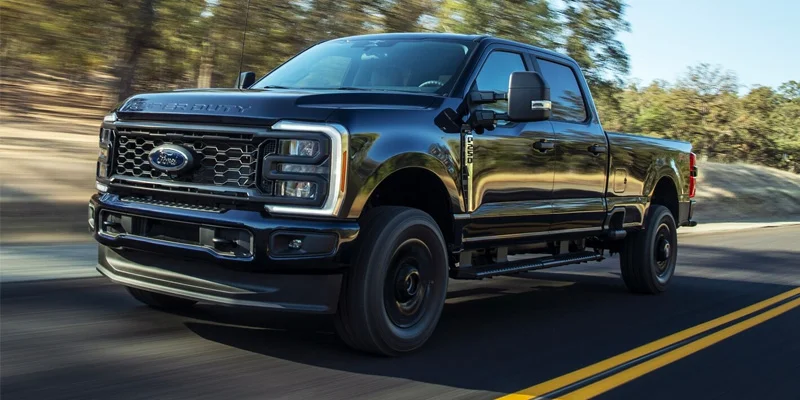
    a black Ford F-350 driving on a road during the afternoon

    If your business regularly tows equipment trailers, dump trailers, or moves seriously heavy materials, you may need to step into the ¾-ton or 1-ton class.

    • A 2500/3500-class truck (e.g., GMC Sierra 2500) can tow up to 18,500–20,000+ lbs and carry payloads around 3,800–4,000 lbs, when properly equipped.
    • Ford Super Duty gas trucks and Chevy/GMC HD gas options are popular with contractors who want big capability without diesel emissions headaches.

    Why it works for contractors & small businesses:

    Heavy-duty trucks are built to handle daily heavy loads and long work hours, making them ideal for concrete and masonry crews, equipment rental and excavation jobs, and landscapers towing big trailers with skid steers or mini-excavators. They offer greater stability and safety when pulling 10,000+ lbs, delivering the durability and confidence small businesses need on every job.

    What to watch out for:

    • Rougher ride when unloaded.
    • Higher fuel and maintenance costs than half-tons.
    • Overkill if you’re mainly just hauling hand tools and light materials.
    • Older diesel HD trucks over 14,000 lb GVWR must comply with CARB’s Truck & Bus regulation—non-compliant trucks can’t be registered.

    MORE: Here are some additional trucks to consider.

    Choosing the right used pickup comes down to understanding your workload and matching it with the truck that can support it. Whether you need the agility of a midsize, the versatility of a half-ton, or the strength of a heavy-duty, the right truck will make your jobs easier and your business more efficient. And when you buy from a trusted dealership, you gain the added confidence of verified inspections, transparent history, and reliable support—so your next work truck is an investment you can depend on every day.
  • Hidden Costs of Buying from a Private Seller in OC

    Title graphic with the seller handing over the key to the buyer

    Buying a used car from a private seller in Orange County seems like a great way to avoid dealership markups — and sometimes it is. Prices on Craigslist, Facebook Marketplace, and OfferUp often look tempting, and the seller may even be local, friendly, and flexible.

    But what many buyers don’t realize is that private-party purchases come with hidden costs, risks, and responsibilities that can turn a “deal” into an expensive mistake. In Orange County — where registration costs are high, smog rules are strict, and scams are common — knowing these hidden pitfalls can save you thousands of dollars and months of frustration.

    When you buy from a private seller in California, you don’t escape taxes—you shift from sales tax to use tax at the same combined rate based on where you live. You pay it when you register at the DMV (or directly to CDTFA in some scenarios).

    • Use Tax: Charged on the purchase price; the DMV collects it during title transfer unless you must file with CDTFA.
    • Transfer & Registration Fees: Vary by vehicle and timing; the DMV’s official fee calculator shows estimates (and late penalties if you miss deadlines).
    • Deadlines Matter: Buyers generally have 10 days to transfer ownership; sellers must file a Notice of Transfer and Release of Liability (NRL) promptly to reduce their exposure. Late actions can trigger penalties.
    • Late-fee shock: California assesses escalating percentages on the Vehicle License Fee and fixed late fees as delays grow. Don’t let a “cheap” car balloon from missed dates.

    Pro tip: Before you hand over cash, run the VIN in the DMV calculator to estimate fees and confirm registration status.

    In California, for most private-party sales the seller is legally responsible for providing a valid Smog Check at the time of sale (generally valid within the last 90 days).

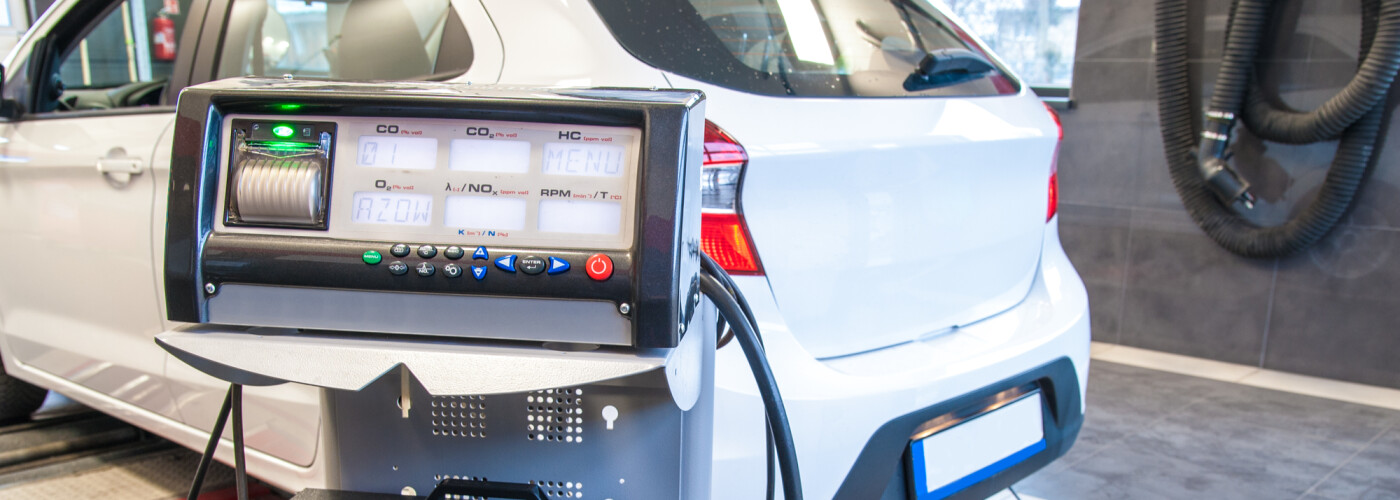
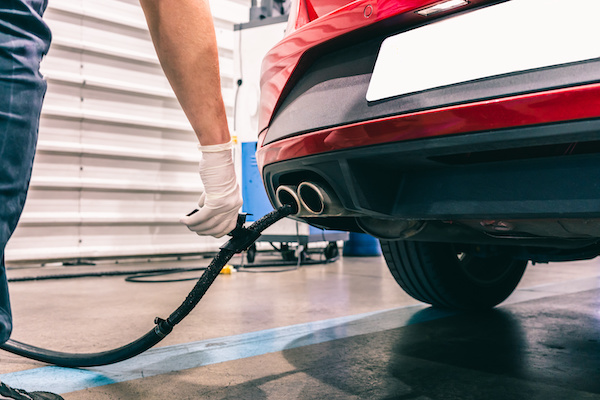
    A young technician doing an emission control in a security inspection of a vehicle protected with a mask and gloves

    But Many Private Sellers:

    • Skip the smog requirement
    • Claim “it passed recently” with no proof
    • Tell you to smog it yourself

    If the car fails, YOU take on the repair costs — and smog failures in Orange County can cost anywhere from $300 to $2,000+ depending on what needs fixing.

    Always Ask For:

    • A valid smog check certificate
    • A printed Vehicle Inspection Report (VIR) showing the actual results

    If they refuse, walk away. It’s the #1 hidden cost in OC private-party sales.
    Clean title doesn’t always mean “problem-free.” You must verify ownership, lien releases, and accurate mileage—or you risk losing the car, paying someone else’s loan, or facing fraud headaches.

    Common Hidden Issues:

    • Existing liens that haven’t been paid off
    • Salvage or rebuilt titles not disclosed
    • Incorrect odometer readings
    • Out-of-state titles requiring extra verification
    • Seller not matching the name on title

    These problems can lead to registration delays, additional fees, or in worst cases, you could lose the vehicle entirely.
    What to Do Before Buying:

    • Check the VIN on the title, windshield, and door jamb
    • Verify the seller’s name matches the title
    • Ask for a lien release letter if applicable
    • Federal rules (as implemented by CA) require mileage disclosure for most vehicles; make sure the same form is signed correctly by both parties.
    • Check the car’s history through NMVTIS, Carfax, or AutoCheck

    Buying without verifying these details is one of the costliest mistakes buyers make.

    Unlike dealerships, private sellers do not provide warranties. Most private-party cars are sold as-is, meaning once money changes hands, the car is yours and so are all its problems. The California Lemon Law generally doesn’t apply to private sales (unless a manufacturer’s warranty still covers the defect or there’s fraud).

    Hidden mechanical issues are extremely common in private sales, especially in high-mileage Orange County vehicles that have spent years in traffic, heat, or near the coast.

    Common Hidden Mechanical Issues:

    • Transmission slipping
    • Oil leaks
    • Check engine lights
    • Brake and suspension wear
    • Cooling system problems
    • Flood damage or corrosion
    • Deteriorated car battery
    • Accident repairs hidden without insurance claims

    A dealership would inspect and recondition these issues. A private seller often doesn’t.

    Pro Tip: If any of these additional signs appear during the inspection, it’s a sign you should reconsider the vehicle.

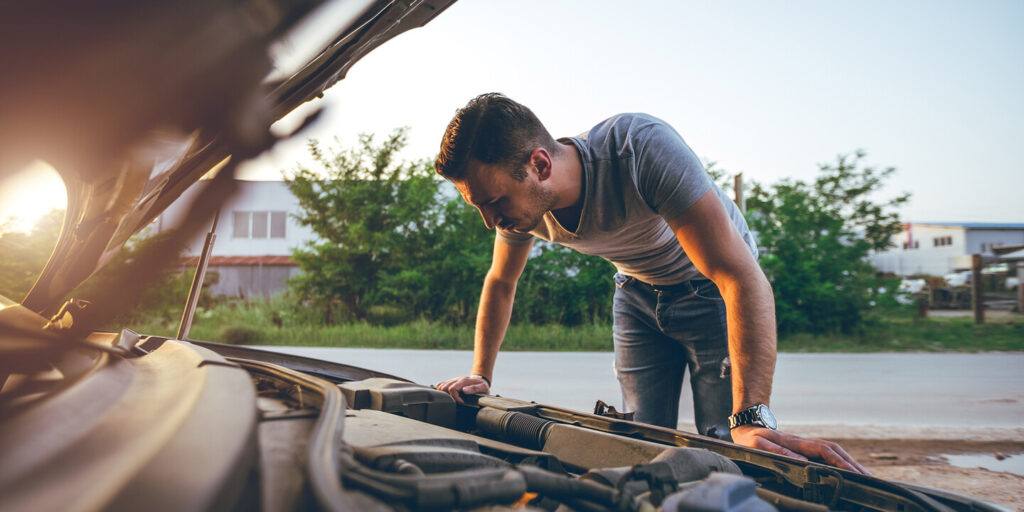
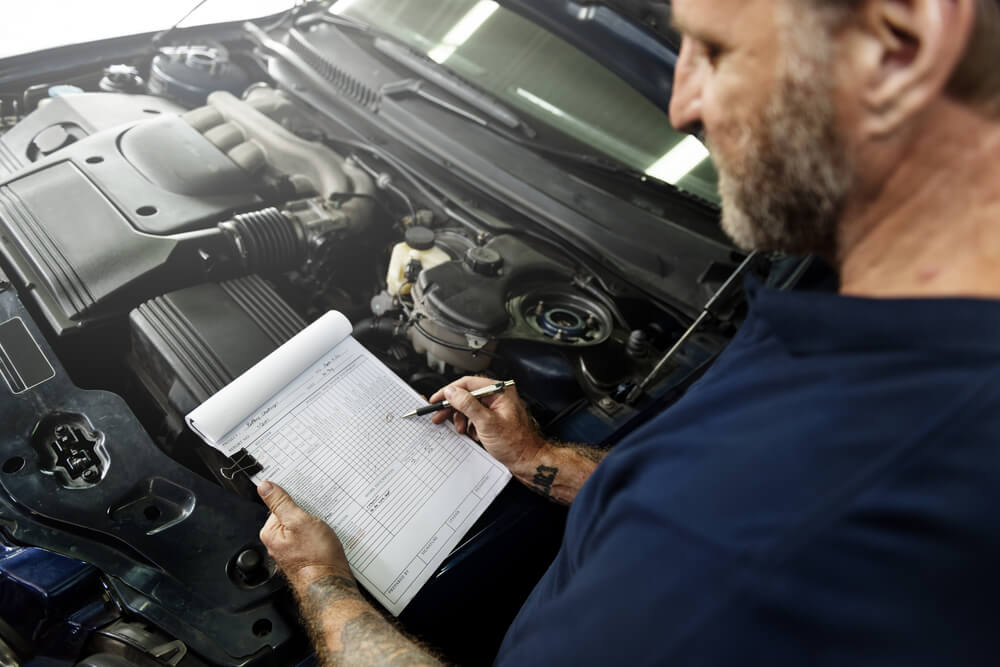
    A young man experiencing a mechanical problem with his vehicle out on the road

    To Protect Yourself:

    Always get a pre-purchase inspection from a reputable mechanic. In Orange County, this typically costs $150–$250, and it’s the best money you’ll spend in the entire process.

    One of the most overlooked hidden costs in private-party sales is what many buyers call the “Ghost Bill” Trap — unpaid tolls, parking tickets, or violations tied to the vehicle before you bought it. In Orange County, where The Toll Roads are heavily used and parking enforcement is strict, this issue is more common than most people realize.

    Even though these violations happened under the previous owner, they can still cause:

    • Registration delays when you try to transfer the car
    • Unexpected fees or penalties tied to the vehicle record
    • Toll violations that balloon from a few dollars to $50–$100+ each

    This happens because violations are often linked to the license plate and vehicle record, not the individual driver. If the seller didn’t pay them — or didn’t file the Notice of Transfer and Release of Liability (NRL) quickly — the car’s record can still show outstanding charges when you visit the DMV.

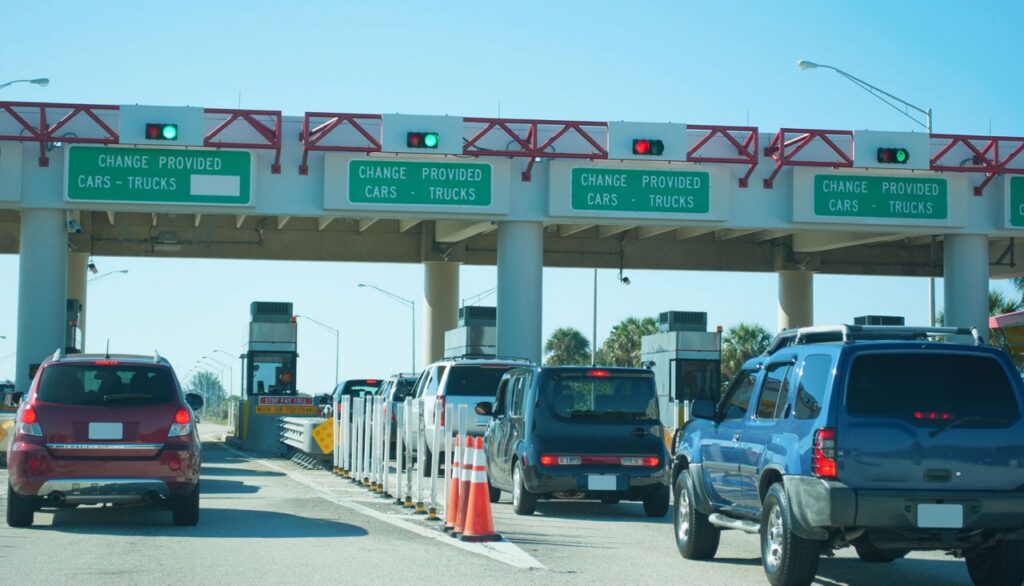
    Cars going through a toll booth

    How to Avoid the Trap:

    • Use the DMV Registration Status Check before you buy.
    • Ask the seller to file the NRL immediately.
    • Call The Toll Roads customer service with the VIN and plate after purchase to clear pre-purchase violations.
    • Transfer the title within 10 days to prevent new tickets from being assigned to the car’s old record.

    Orange County is a hot market for private sales, which unfortunately attracts scammers pretending to be “private sellers.”

    Some common scam tactics include:

    • Fake VINs or cloned VIN plates
    • Fake titles
    • Stolen vehicles sold with fraudulent paperwork
    • Curbstoners (unlicensed dealers flipping cars illegally)
    • Payment scams: “Cashier’s check scams” where buyers receive bad checks
    • Sellers clearing check-engine codes right before showing the car

    Once the transaction is done, you have very little protection. Always meet in a public place, verify the seller’s ID, and avoid cash-only deals without proper paperwork.

    Absolutely — but only if you protect yourself.

    A buyer standing in the middle of a dealer and a private seller questioning if he/she should trust the private seller

    Private sales CAN save you money, but only if:

    • Seller-provided Smog Check (within 90 days) + Vehicle Inspection Report.
    • Title with seller’s name, and lien release if a lender is listed.
    • Odometer disclosure (conforming to CA rules for model-year age).
    • NMVTIS report; walk away from branded/salvage unless you fully understand the implications.
    • Pre-purchase inspection from a BAR-registered shop; get the estimate in writing.
    • A plan to file your transfer in 10 days and have the seller submit the NRL within 5 days to avoid toll/parking hassles.
    • Screenshot of the DMV fee calculator estimate for your VIN before you pay.

    If you have doubts about a private seller’s trustworthiness, a dealership is your safest option, offering far more transparency and peace of mind

    Private-party car shopping in Orange County doesn’t have to be risky — but you must go in prepared. With the right information and a smart buying process, you can avoid costly mistakes and find a car that truly fits your needs and budget.

    By following these steps, you’ll protect your wallet, avoid scams, and ensure that the “great deal” you found is actually great — not a financial trap.

  • Buy Used Hybrid vs EV in Southern California

    title image of blog with kia cars driving on a road

    Southern California is one of the most exciting car markets in the country. With high fuel prices, strict emissions standards, and the state’s transition toward clean energy, many drivers are asking the same question: is a used hybrid or used EV the smarter buy?

    The truth is both options have their advantages, and the right choice depends on how you drive, where you live, and whether you have access to charging. Let’s break it down.

    California’s mix of policies, infrastructure, and lifestyle makes owning an electrified vehicle much more practical than in other states.

    • Fuel Prices: Gas prices are consistently among the highest in the U.S. (often $1.50–$2.00 higher per gallon than the national average). Hybrids and EVs save SoCal drivers thousands annually.
    • Traffic Conditions: Stop-and-go commutes favor hybrids (regenerative braking = better MPG) and EVs (max efficiency in low-speed traffic).
    • Environmental Policies: California enforces strict emissions standards and is phasing out new gasoline car sales by 2035. Used EVs and hybrids will likely retain long-term demand in SoCal as clean transportation becomes mandatory.
    • Charging Growth: California leads the U.S. with more than 178,000 charging ports, and more are added each year.
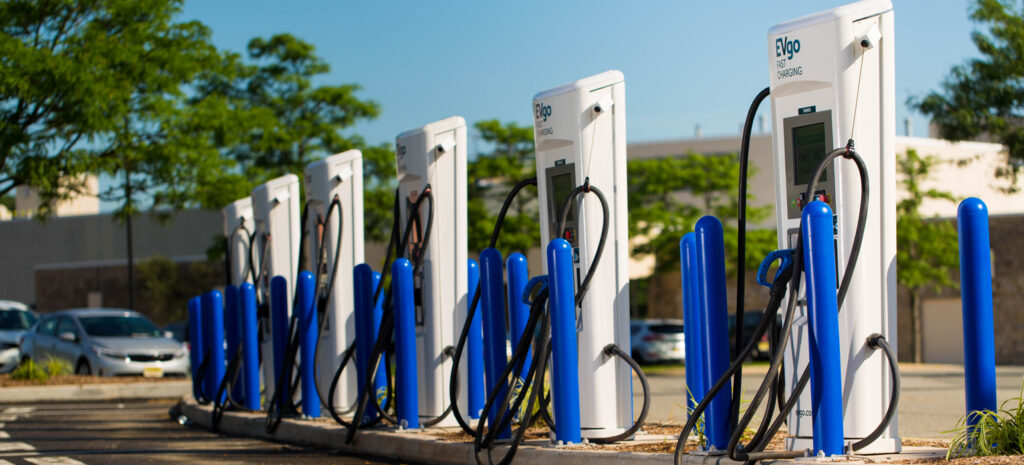
    A row of EV charging stations lined up.

    This means whether you choose a hybrid or an EV, you’ll benefit more in Southern California than in most other regions.

    The financial side is where EVs really shine in SoCal, thanks to stackable incentives.

    Federal Used EV Tax Credit:

    • Up to $4,000 off or qualifying EVs/PHEVs or 30% of the purchase price.
    • Qualifying used EV must be:
      • Purchased from a dealer (not private sale).
      • Priced under $25,000.
      • Model year at least 2 years older than purchase year.
      • Buyer must meet income limits ($75k individual / $150k married).
    • The best part: since 2024, this credit can be transferred to the dealer for an instant discount off the purchase price.

    Southern California Utility Rebate:

    • Southern California Edison (SCE): $1,000 standard rebate; up to $4,000 for income-qualified buyers.
    • LADWP (Los Angeles): Up to $4,000 for qualifying used EVs. In some cases, when stacked with federal credits, buyers report savings of $6,000–$8,000 on a single purchase.

    Replace Your Ride (Income-Qualified Programs):

    • Grants of $7,000–$12,000 to scrap an older vehicle and replace it with a hybrid, PHEV, or EV.
    • Includes additional support like $2,000 for home charging installation.
    • Funds are limited, so these programs open/close based on budgets.

    For EV buyers, these rebates can reduce costs by 30–50%, making used EVs a much stronger financial case.

    💡 Contact us today to learn more about our incentive offers.

    Battery life is the #1 worry for used EV shoppers, but most fears are outdated.

    On average, EV batteries lose only about 1.5–2% of capacity per year. In SoCal’s climate, this means a five-year-old EV may only lose 25–30 miles of range.

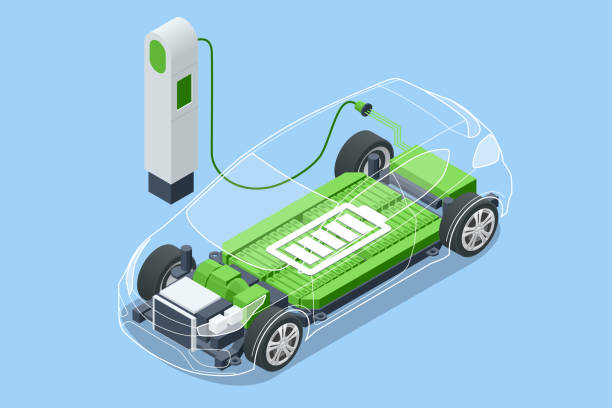
    EV battery and how it is charged

    Warranty and Regulation:

    Warranties provide consumers with peace of mind. Most EVs come with 8-year/100,000-mile battery coverage, while Toyota and Hyundai extend some hybrid and PHEV battery warranties up to 10 years/150,000 miles.

    California’s new rules give EV shoppers more confidence than ever. Beginning with 2026 models, electric vehicles must keep at least 70% of their battery capacity for 10 years or 150,000 miles. Starting in 2030, that standard rises to 80%. In simple terms, newer EVs are built to last longer—and these protections will benefit buyers in the used market too.

    💡 Pro Tip for Buyers: Ask for a battery health report (many EVs track state of health in software), and run a long highway test with A/C on to see real-world range.

    When it comes to dependability, not all powertrains are equal.

    Hybrids: Proven and Predictable

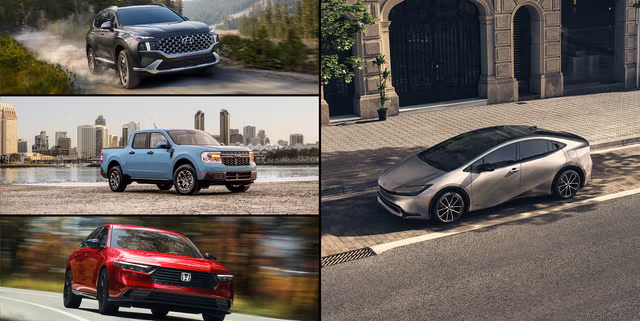
    Some of the top performing hybrid vehicles in a collage

    Hybrids have been on U.S. roads for over 2 decades and are known for their long-term durability. The Toyota Prius, for example, often runs past 200,000 miles with just routine care. Today, brands like Toyota, Honda, and Ford have refined hybrid systems so well that failure rates remain very low.

    • The gasoline engine handles most of the heavy lifting, so the smaller battery is less stressed compared to a full EV battery.
    • Hybrid batteries are air-cooled and built for longevity, and replacement costs have dropped significantly in the past decade (often $1,500–$3,000 today).
    • Consumer Reports consistently ranks hybrids like the Toyota Prius, Honda Accord Hybrid, and Lexus ES Hybrid among the most reliable vehicles overall.
    • Explore more on why Hybrids are the smart choice in SoCal.

    👉 For drivers who want peace of mind, hybrids are the most proven option with the lowest ownership risk.

    EVs: Simpler Mechanics

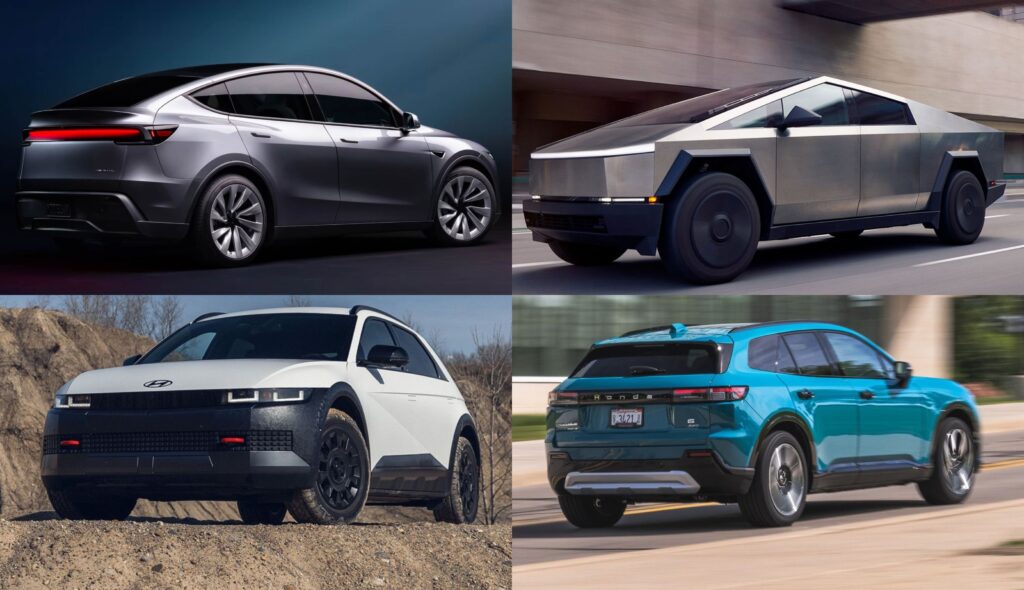
    Four of the top EVs in a collage

    EVs, in theory, should be more reliable because they have far fewer moving parts. There are no oil changes, timing belts, or exhaust systems, and regenerative braking means brake pads last longer. For many owners, that translates into lower maintenance costs year after year.

    However, because EVs are still relatively new, reliability studies show mixed results:

    • Early EVs like the Nissan Leaf and Chevy Bolt had more issues with battery degradation and recalls, especially around fast charging and thermal management.
    • Newer EVs (Tesla Model 3/Y, Hyundai Kona EV, Kia EV6, etc.) show better long-term battery performance, but may experience software glitches, touchscreen malfunctions, or problems with advanced driver assistance systems.
    • Repair costs can be higher due to specialized parts and limited availability of trained technicians, though routine upkeep is minimal compared to hybrids or gas cars.

    👉 If you can tolerate occasional tech hiccups, an EV will still save you money over time due to lower maintenance and fueling costs.

    PHEVs: Twice the Systems

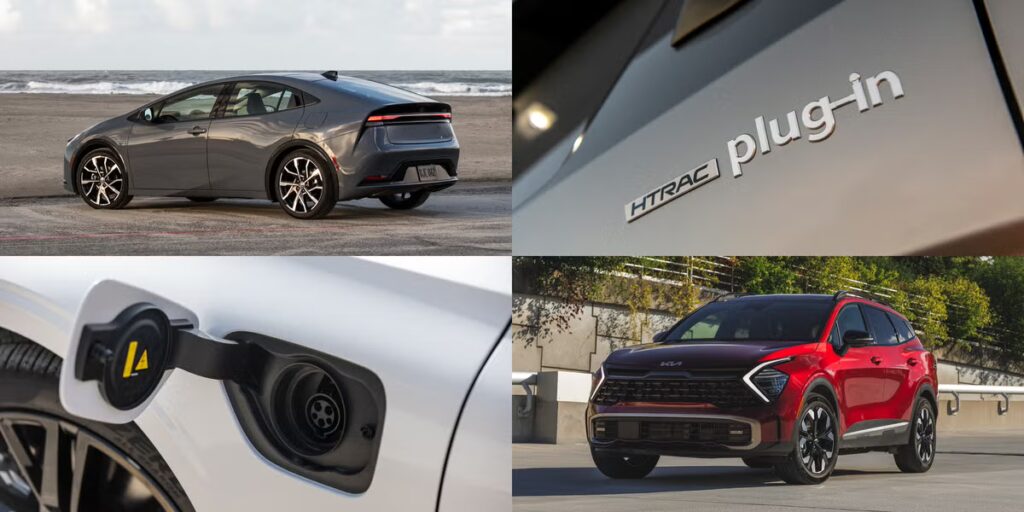
    Two PHEV vehicles and a close up images of a gas tank and name of trim

    Plug-in hybrids (PHEVs) combine a full hybrid system with a larger battery and plug-in charging capability. While they offer flexibility—electric miles for short trips and gas backup for longer ones—this dual nature can impact reliability.

    • Two drivetrains to maintain: a gas engine plus a larger EV system, meaning more parts that can fail.
    • Battery use is higher than a traditional hybrid, so range degradation over time is more noticeable.
    • Consumer surveys often rank PHEVs as less reliable than both hybrids and EVs because of this added complexity.

    👉 PHEVs can be a sweet spot if you want both gas and electric flexibility, but they typically come with the highest risk of repairs out of the three.

    Even with incentives, EVs and hybrids come with unique costs:

    • Annual EV Road Improvement Fee: About $100/year on EV registrations in CA.
    • Insurance: EVs can carry higher premiums (due to parts/repair costs) , while hybrids usually cost about the same as gas vehicles.
    • Fuel vs. Charging:
      • Home charging = ~$0.15–$0.25 per kWh (often cheaper with time-of-use rates). That’s the equivalent of paying $1–$1.50 per gallon.
      • Gas in SoCal = often $5–$6 per gallon. Hybrids mitigate this but can’t compete with home-charged EV costs.
      • Hybrids improve MPG significantly, but EVs still win on fuel cost if home charging is available.

    Think about your lifestyle before deciding:

    Used Hybrid: 🚙

    • Ideal for renters without home chargers.
    • Simple, reliable, and less expensive to maintain.
    • 40–55+ MPG in LA traffic saves hundreds monthly.

    🚨 Browse our inventory of 100+ hybrid vehicles.

    Used EV:

    • Perfect if you own a home or have charging access.
    • Lowest operating costs (fuel + maintenance).
    • Best option for budget-savvy buyers who take advantage of rebates + depreciation discounts.

    🚨 Shop our EV lineup and choose from more than 20 vehicles.

    Used PHEV: 🔌

    • Great compromise: electric miles for local errands + gas backup for road trips.
    • Best if you can charge at home but still want flexibility.
    • Just note: less reliable than hybrids, but more flexible than EVs.

    🚨 View our PHEV inventory of 20+ vehicles.

    Southern California offers the perfect environment for both hybrids and EVs. If you live in an apartment or rent without charging access, hybrids will save you the most headaches. But if you own a home or have consistent charging access, a used EV will outperform a hybrid in cost savings, especially with today’s rebates, steep depreciation, and California’s supportive policies.

    👉 Either way, you’ll save money compared to a traditional gas car—and contribute to cleaner air in one of the country’s most congested regions.

  • Used Car Warranties Explained: What’s Covered and What’s Not

    blog's graphic with title "Used Car Warranties Explained: What’s Covered and What’s Not"

    Buying a used car is often one of the smartest financial moves a driver can make. You avoid the steep depreciation of new cars, save money upfront, and still get a reliable vehicle if you choose carefully. But one of the biggest concerns for shoppers is protection after the sale: “Do used cars come with warranties?”

    The short answer: sometimes yes, sometimes no. The type of coverage depends on the age of the car, where you buy it, and state or federal laws.

    This breaks down everything you need to know about used car warranties, so you can make a confident decision and avoid costly surprises down the road. By the end, you’ll have the knowledge to shop with confidence and protect your investment.

    1. Remaining Factory Warranty (Manufacturer Coverage)

    If the vehicle is only a few years old, it might still be covered by the original manufacturer’s warranty. These often include two main types:

    • Bumper-to-Bumper Warranty: Covers almost everything related to parts and systems except wear-and-tear items like brakes and tires. Commonly lasts 3 years/36,000 miles.
    • Powertrain Warranty: Covers the most expensive parts—engine, transmission, and drivetrain. Often lasts 5 years/60,000 miles or more.

    👉 Good news: these warranties usually transfer automatically to the next owner. Just call the brand’s service department with the VIN to confirm how much time/mileage is left. If you have any questions, contact us today!

    2. Certified Pre-Owned (CPO) Warranty ⭐

    If you’re shopping at a franchised dealership, you’ll likely come across CPO vehicles. These cars are thoroughly inspected and reconditioned to meet manufacturer standards. To qualify as CPO:

    • The car must meet strict age and mileage requirements (usually under 5–7 years old and under 80,000 miles).
    • It goes through a multi-point inspection (often 100–200+ checks).
    • The dealer reconditions the car to factory standards.

    CPO warranties are backed by the manufacturer, not just the dealer, which makes them highly reliable. Coverage typically includes:

    Certified technicians doing inspection on a used car
    • Extra 12 months/12,000 miles (or more) of bumper-to-bumper coverage.
    • Extended powertrain protection (some programs go up to 6 years/100,000 miles).
    • Roadside assistance: Towing, jump-starts, lockout service, and flat tire help.
    • Rental reimbursement and trip-interruption coverage.
    • Vehicle history report included (like Carfax or AutoCheck).

    💡 Pro Tip: CPO cars usually cost $1,000–$2,000 more than similar non-CPO vehicles, but the extra peace of mind and manufacturer backing often make it worth it.

    3. Dealer Warranties: Limited but Useful

    Not every used car will qualify as CPO, especially at independent dealerships or smaller lots. However, many dealers still offer short-term limited warranties to build trust with buyers. These might cover only certain parts (like the engine or transmission) for 30–90 days.

    Common examples include:

    • 30 days/1,000 miles limited coverage on the powertrain.
    • “50/50” warranties, where the dealer pays half the cost of covered repairs.

    All dealer warranties must be disclosed on the FTC Buyers Guide sticker on the car’s window. This sticker will clearly state:

    • Whether the car is sold “As-Is” (no warranty),
    • Or if there’s a Dealer Warranty (and what’s covered).

    📸 Always read the fine print and take a photo of this sticker for your records.

    4. Implied Warranty (Your Hidden Protection)

    Even if a dealer doesn’t provide a written warranty, you may still be protected by implied warranties under state law. These guarantee that:

    • The vehicle is fit for ordinary driving.
    • It meets basic quality standards.

    However, dealers in many states are allowed to sell vehicles “As-Is,” which disclaims these protections. Some states, like Connecticut and Massachusetts, do not allow “As-Is” sales from licensed dealers, requiring minimum warranty coverage instead.

    This means your legal protection depends on where you buy. Always research your state’s consumer protection laws before shopping.

    5. Extended Warranties & Service Contracts 🔧

    Dealers often offer service contracts (commonly called “extended warranties”) for an extra fee. These are not true warranties but contracts that cover specific repairs after the factory warranty ends.

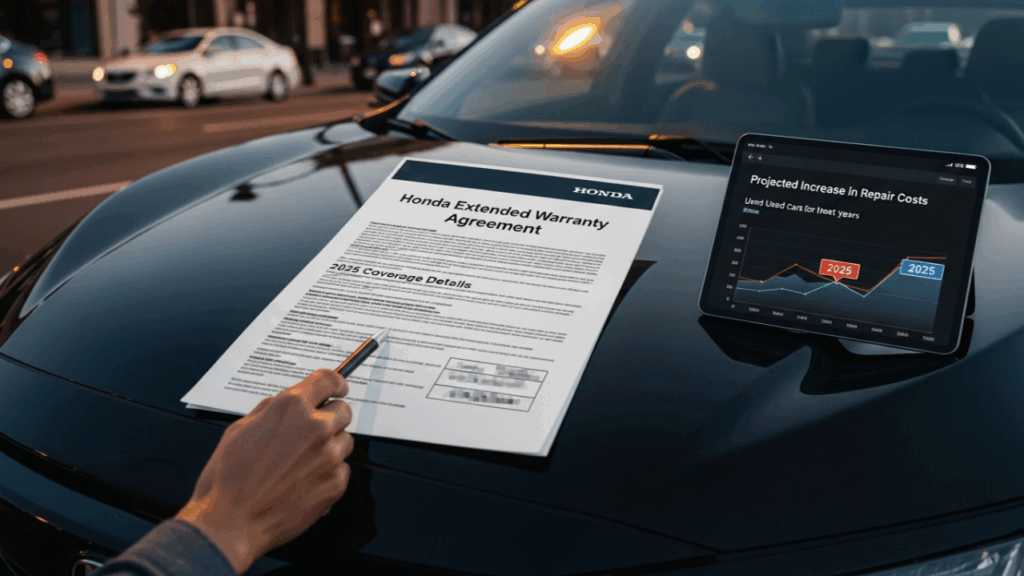
    Extended warranty contract for Honda with estimation of repair costs increasing in the future.

    What You Need to Know Before Buying One:

    • They are optional add-ons, not automatically included.
    • Manufacturer-backed service contracts are usually more reliable than third-party ones.
    • Coverage varies wildly—some plans cover only major engine parts, while others are closer to bumper-to-bumper.

    Advantages:

    Extended warranties give drivers peace of mind by covering unexpected repairs. They’re especially useful for cars with complicated electronics or turbocharged engines, where repair costs can quickly add up.

    Disadvantages:

    The downside is that these plans can be overpriced and often exclude common failure items like electronics or gaskets. Many third-party companies also make claims difficult, which can leave owners frustrated when they need coverage most.

    💡 Consumer reports show many buyers never use their extended warranty—but for some, it provides peace of mind.

    If a car is sold “As-Is,” the dealer makes no promises about the car’s condition. If something breaks the next day, you’re on the hook for repairs.

    The FTC Buyers Guide Sticker:

    Every dealer-sold used car in the U.S. must have an FTC Buyers Guide displayed on the window. This sticker tells you clearly:

    • If the car is being sold “As-Is” or with a warranty.
    • What systems are covered.
    • How long the warranty lasts.
    • Whether you pay part of the repair cost.
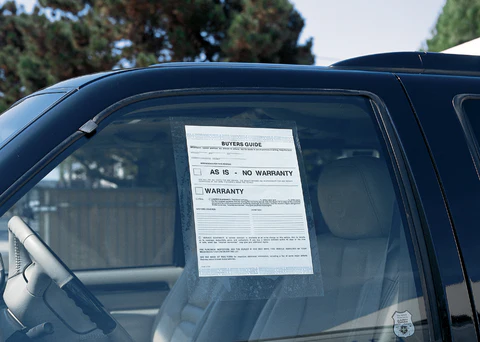
    FTC Buyers Guide Sticker on a black used car

    Some states don’t allow “As-Is” sales at all, while others place limits on how they’re applied. That’s why it’s important to take a photo of the sticker and review the Buyers Guide before signing. If a dealer removes or alters it, you’ll have proof of the original offer.

    Even the best warranties have exclusions. Commonly not covered:

    • Wear-and-tear items (tires, brakes, wiper blades, clutches)
    • Routine maintenance (oil changes, filters, fluids)
    • Cosmetic issues (paint chips, upholstery tears, scratches)
    • Damage from neglect, accidents, or aftermarket modifications
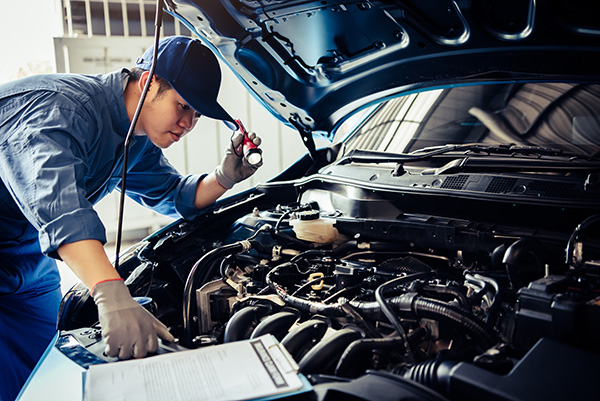
    Car mechanic technician holding flashlight checking engine with checklist clipboard for pre-purchase inspection.

    That’s why it’s always smart to get a pre-purchase inspection from an independent mechanic—even if the car is CPO.

    Here’s a quick step-by-step checklist:

    1. Check the Buyers Guide Sticker – Look for “As-Is” vs “Dealer Warranty.”
    2. Call the Manufacturer’s Service Department – Give them the VIN to confirm remaining coverage.
    3. Ask for the CPO Booklet (if CPO) – Read when the warranty starts and ends.
    4. Get Dealer Warranty Details in Writing – Confirm parts covered, length, and who pays labor/parts.
    5. Read Service Contracts Carefully – Check exclusions (wear-and-tear items, electronics, etc.).

    📝 Save all documents, including the Buyers Guide, warranty booklet, and repair records. They may be critical if you need to file a claim later.

    MORE: Learn more tips on the used car buying process.

    So, do used cars come with warranties? Yes—but only under certain conditions.

    The bottom line: Never assume a used car comes with a warranty. Always check the paperwork, confirm all coverages in writing, and know your rights. Doing so can save you thousands in unexpected repair bills and give you peace of mind on the road.

  • 10 Ways to Protect Your Car From Sun Damage in California

    Title graphic of this blog

    California is famous for its endless sunshine—but while the weather is perfect for outdoor living, it can be brutal on your car. From faded paint to cracked dashboards, prolonged exposure to UV rays and high temperatures can significantly reduce your vehicle’s value, safety, and appearance.

    To help you keep your car looking new and running longer, we’ve outlined 10 proven ways to protect your car from sun damage in California.

    California drivers face unique challenges compared to other states:

    • Intense UV Radiation: According to the Environmental Protection Agency (EPA), UV levels in California are among the highest in the nation, especially in Southern California. UV radiation here can be 50% stronger in the summer. Prolonged UV exposure can oxidize car paint, making it dull and faded.
    • High Temperatures: Temperatures can regularly exceed 100°F, baking vehicles left outdoors and accelerating material breakdown. Hot summers in inland areas (Inland Empire, Central Valley, and deserts) can cause interior materials like leather, vinyl, and plastic to warp or crack.
    • Air Quality + Sunlight: Smog and pollutants in combination with UV light accelerate chemical reactions on your car’s paint, speeding up oxidation and fading.
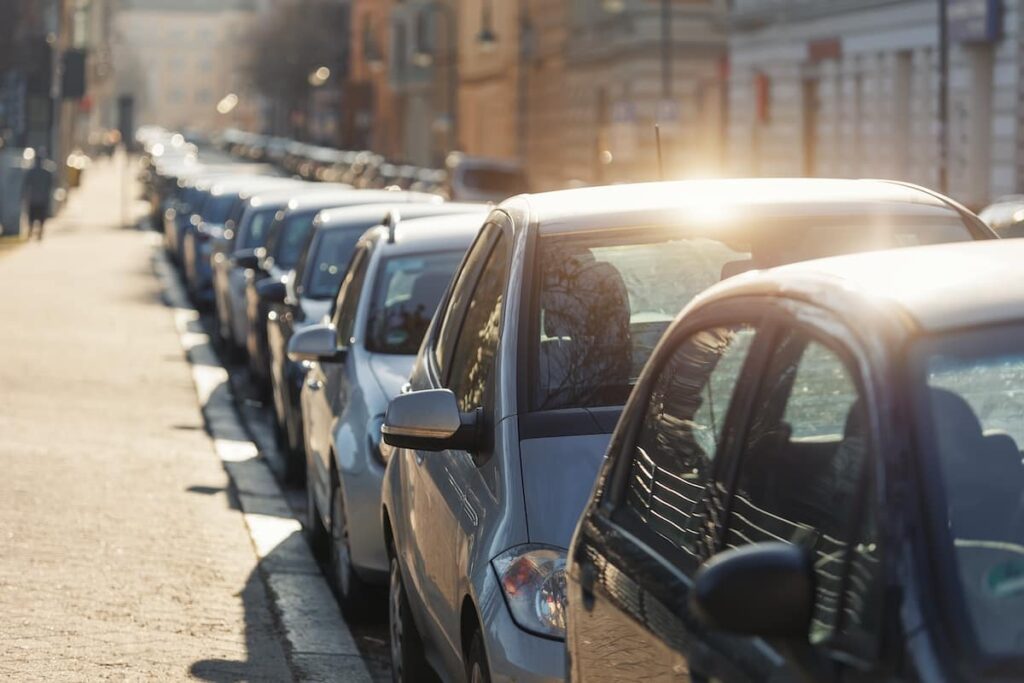
    Rows of cars being left out under the sun

    The American Automobile Association (AAA) notes that extended exposure to sunlight and high heat is among the top five factors that accelerate vehicle depreciation.

    More: Discover how floods can damage your car and the steps you can take to protect it.

    To understand why protection matters, let’s break down the science:

    1. UV Radiation and Paint Oxidation

    • UV rays break down the molecular structure of automotive paint.
    • The clear coat layer is the first line of defense; once it fails, the paint underneath oxidizes, leading to dull, chalky surfaces.
    • Red and black cars suffer most because darker pigments absorb more UV energy.
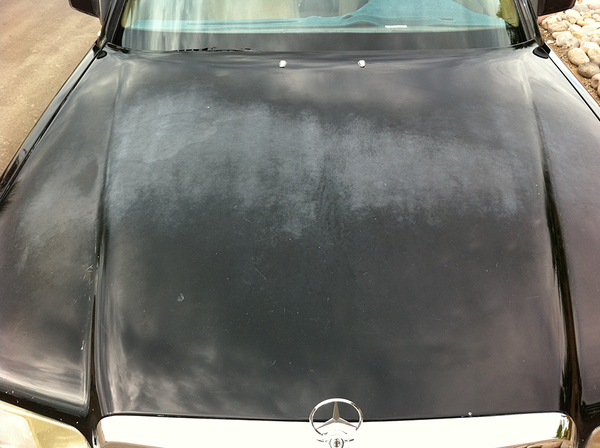
    paint being damage from the intense sun

    2. Interior Heat Buildup

    • On a 95°F day in California, the interior of a parked car can reach 140–160°F within 30 minutes.
    • Leather loses natural oils, vinyl becomes brittle, and plastics warp.

    3. Glass and Headlights

    • UV exposure causes polycarbonate headlights to yellow and fog.
    • Windshields magnify interior heating, “greenhouse effect,” making dashboards highly vulnerable.

    4. Tires and Rubber Seals

    • Tires exposed to high temperatures develop ozone cracking — microscopic cracks that grow over time.
    • Door and window seals lose elasticity, leading to leaks and wind noise.

    5. Battery Performance

    • Heat accelerates chemical reactions in batteries, leading to fluid evaporation and shortened lifespan.
    • AAA reports that batteries in hot climates last 25–33% shorter compared to those in mild regions.

    More: Know the signs that it’s time to replace your vehicle.

    1. Park in the Shade 🌳

    Whenever possible, park under trees, in garages, or in shaded structures. Even a few hours less of direct sunlight each day slows down paint oxidation and interior fading.

    Pro Tip:

    • In California’s dense cities, look at parking apps that help locate shaded or covered lots (worth the small fee for daily protection).
    • Rotate parking orientation (if outdoors at home) so the same side isn’t always sun-facing.

    2. Invest in a High-Quality Car Cover

    A breathable, UV-resistant car cover is one of the best defenses against paint and interior damage, especially if you park outdoors frequently. Look for covers with:

    • Multi-layer breathable covers that block UV
    • Water resistance
    • A snug fit to prevent dust buildup but also allow moisture escape
    • Brands like Covercraft and WeatherTech are highly recommended by professional detailers in California.
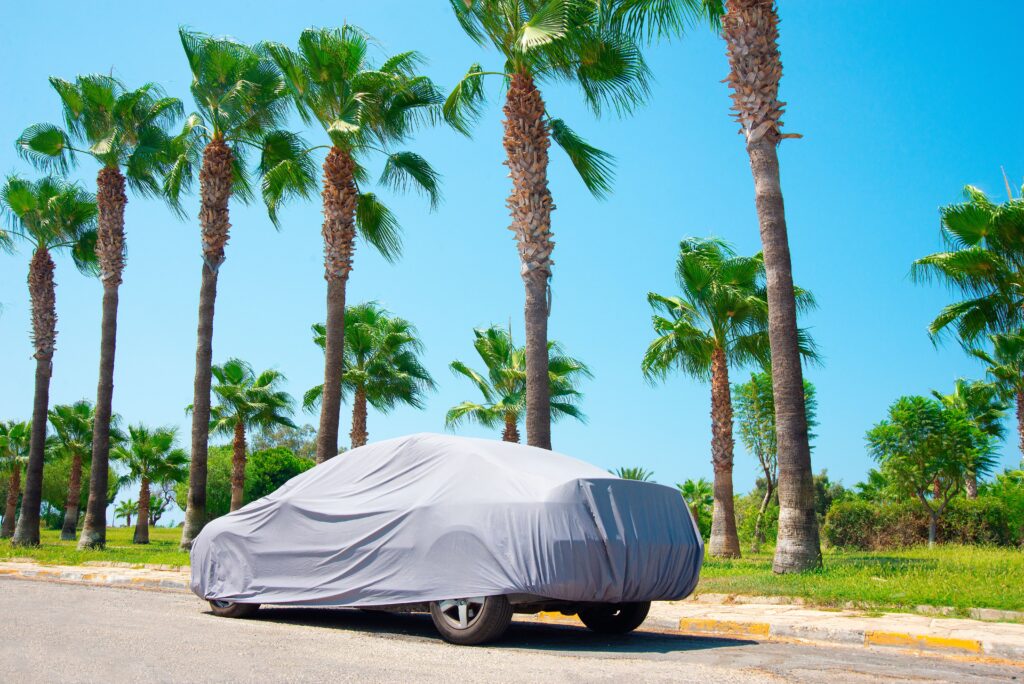
    Utilizing UV-resistant car cover under the sun

    3. Apply Ceramic Coating, Sealant or Wax

    • Ceramic coating: Nano-ceramic particles bond with clear coat to create a hydrophobic, UV-resistant barrier. This produce an invisible shield against UV rays, dirt, and pollutants. Typically last up to 2-5 years.
    • Synthetic sealants: Last 6–12 months, easier for DIY use.
    • Carnauba wax: Natural option and more affordable, but requires reapplication every 2–3 months in California’s climate.

    According to professional detailers, ceramic coating can increase paint longevity by 2x to 3x in sunny states like California and estimate that it can save $2,000–$4,000 in paint restoration costs over a 5-year period.

    4. Use a Reflective Windshield Sunshade 🛡️

    Sunshades block direct sunlight, reducing dashboard heat by up to 40°F. This prevents fading and cracking on dashboards and steering wheels. Consider custom-fit shades (e.g., WeatherTech TechShade) for maximum coverage.

    5. Tint Windows — Legally

    California law allows:

    • Front side windows: up to 70% visible light transmission (very light tint)
    • Rear side and back windows: any darkness, as long as you have dual side mirrors

    Window tint blocks up to 99% of UV rays, helping protect your skin and keeping your car’s interior cooler.

    6. Wash and Wax Regularly 🚿

    Dirt and pollutants “bake” into the paint under the sun, accelerating fading and oxidation. A routine wash removes harmful particles, while waxing adds an extra UV shield. Aim for every 2 weeks in summer.

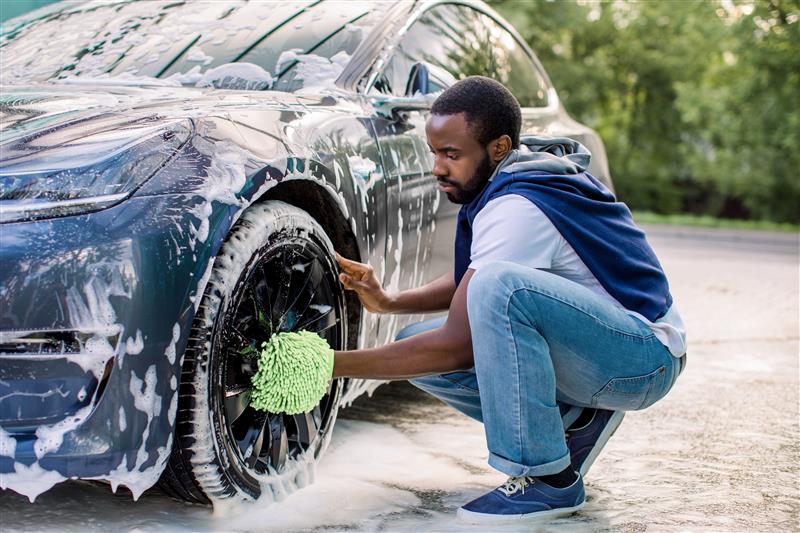
    Washing car

    7. Maintain Proper Tire Care

    Hot California asphalt can exceed 150°F, which can cause serious damage to your vehicle’s tires—and even pose a risk to you if you’re not careful.

    • Check tire pressure weekly; heat expands air, risking blowouts
    • Inflate tires to manufacturer’s recommended PSI
    • Inspect for cracks, and avoid prolonged driving on scorching pavement when possible
    • Apply rubber protectant sprays (silicone-free) to seals and weatherstripping
    • Store cars not in use on tire cradles or with covers to prevent UV cracking

    8. Headlight Protection

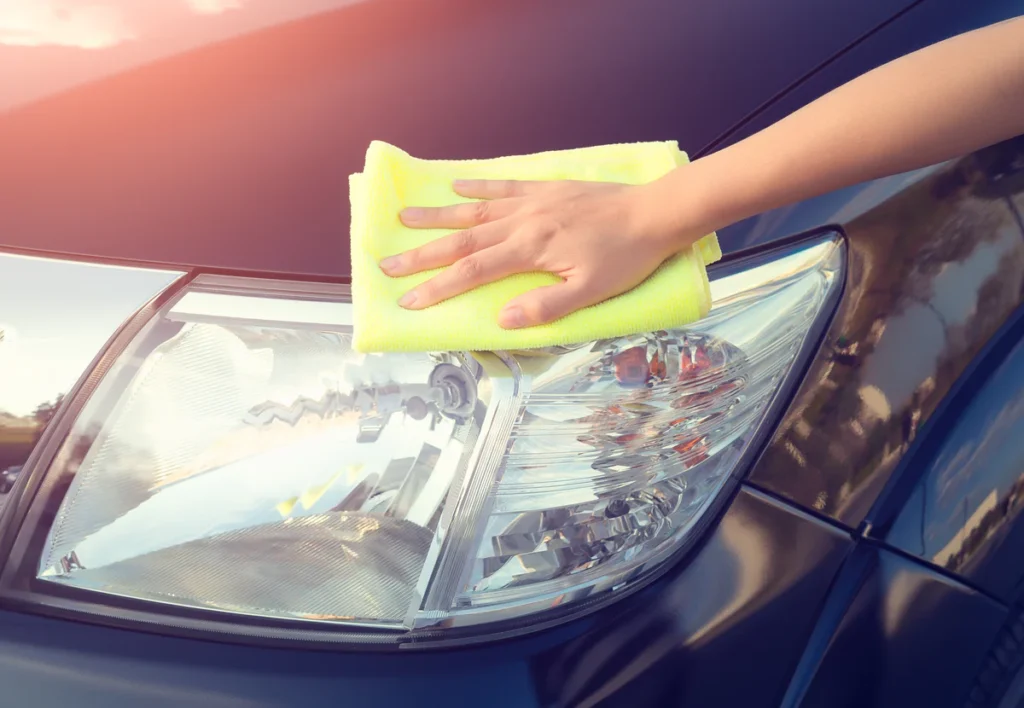
    UV rays can cause headlight lenses to yellow, reducing nighttime visibility by up to 50%. To restore clarity, polish the lenses with a headlight restoration kit and finish with a UV-resistant clear coat. For added protection, consider applying a protective film to help prevent future yellowing.

    Polishing and adding protection layers to headlights

    9. Battery Protection

    Always try to keep your battery cool. If your car has a heat shield around the battery, keep it in place. Parking in shaded areas also helps prevent evaporation of battery fluids.

    • Inspect batteries more frequently (every 6 months).
    • Add a battery insulation kit if you live in desert regions.

    10. Condition Leather and Interior Surfaces

    Use conditioners with UV inhibitors on leather seats and vinyl dashboards every 1–3 months. This prevents drying, fading, and cracking.

    • Frequency: Every 4–6 weeks in summer, every 2–3 months in winter.
    • For Vinyl/Plastic: Also protect with 303 Aerospace Protectant, which resists dust and adds a matte UV barrier.

    Protecting your car from sun damage isn’t just about aesthetics — it’s about preserving value and safety:

    • Preserve Resale Value Kelley Blue Book data shows cars with well-maintained paint and interiors sell for $1,000–$3,000 more on average.
    • Enhance Safety – Clear headlights and strong tires prevent accidents.
    • Improve Comfort – Cooler interiors make daily driving far more enjoyable.
    • Cost Savings – Preventative care is cheaper than repairs (dashboard replacement $1,500+, full repaint $5,000+).

    More: Find the car that’s right for you—right here.

    California sunshine is beautiful—but without the right protection, it’s your car’s worst enemy. By investing in shading strategies, protective coatings, interior care, and regular maintenance, you can add years of life and thousands in value to your vehicle.

    Think of it like sunscreen for your car: the more consistent you are, the better your car will look, drive, and resell.

  • California Smog Check Rules for Used Cars

    Whether you’re buying, selling, or registering a used vehicle in California, understanding the state’s smog check requirements is crucial. California has some of the strictest emissions laws in the country, non-compliance can lead to DMV rejections, fines, or even being unable to legally register a car.

    A smog check (also known as a smog test or emissions test) is a state-mandated inspection to measure a vehicle’s emissions output. The goal is to ensure that vehicles do not exceed federal and state air pollution limits. It’s part of California’s Vehicle Inspection Program, overseen by the Bureau of Automotive Repair (BAR).

    California suffers from some of the worst air pollution in the U.S., particularly in high-traffic metro areas like Los Angeles, Riverside, and San Bernardino. To combat this, the California Air Resources Board (CARB), in partnership with the Department of Motor Vehicles (DMV) and Bureau of Automotive Repair (BAR), enforces strict emissions testing to ensure cars meet clean air standards.

    car releasing smogs

    Goals of the Smog Program:

    • Detect high-polluting vehicles
    • Reduce greenhouse gas emissions (NOx, CO, HC)
    • Ensure compliance with federal EPA and California regulations
    • Protect public health and the environment

    In California, a smog check is required when:

    1. Selling a Used Car (Private or Dealer Sale)

    If you are selling a gas-powered vehicle that is more than 4 model years old, you are legally responsible for providing a valid smog certificate at the time of sale.

    • California Vehicle Code §24007(b)(2): “The seller is required to provide evidence of compliance with the smog requirements at the time of delivery.”
    • The smog certificate is valid for 90 days
    • If the vehicle fails, you must repair it before selling (or disclose and negotiate an “as-is” sale if the buyer agrees)

    2. Registering a Used Car Purchased from Out of State

    • Required even if the car passed emissions in another state
    • Must be tested and pass California’s stricter emissions standards
    • Required for gasoline, diesel, and hybrid vehicles (with some age exceptions)

    3. Renewing Vehicle Registration

    • Most vehicles must pass smog every 2 years (biennial inspection)
    • You’ll receive a DMV renewal notice stating whether a smog check is required

    🔎 If you’re buying or selling a used car, a smog check is usually mandatory — unless it meets one of the exemptions (listed below).

    Not all used cars are required to undergo a smog inspection. Here are the major exemptions:

    ✅ Age-Based Exemptions:

    Gasoline vehicles under 4 model years old

    Exempt at time of sale and renewal (but buyer must pay $8 smog abatement fee)

    Diesel vehicles model year 1997 and older

    Exempt

    Vehicles manufactured before 1976

    Permanently exempt (considered “classic”)

    ✅ Fuel-Type Exemptions:

    • Fully electric vehicles (EVs)
    • Motorcycles
    • Natural gas vehicles over 14,000 lbs. GVWR
    • Trailer-type vehicles

    ⚠️ Hybrid vehicles are NOT always exempt. Smog checks may be required for hybrids that are older than 8 model years, depending on BAR regulations. Even though they are not always exempt, hybrid vehicles are still a smart choice.

    California doesn’t require smog checks in every county. However, most populated areas do. These are known as Enhanced Smog Check Areas and include:

    LA county covering in smog
    • Los Angeles County
    • Orange County
    • Riverside County
    • San Bernardino County
    • Santa Clara County
    • San Diego County
    • Sacramento County

    1. Find a Licensed Smog Station or STAR Station

    • Search for you local licensed Smog or STAR Station here

    2. Take Your Car in for Inspection

    • Inspection includes tailpipe emissions, onboard diagnostics (OBD), and visual inspections

    3. Pass or Fail

    • If passed, the smog certificate is electronically sent to DMV
    • If failed, repairs must be made and retested

    MORE: Find out when’s the best time to buy a used car

    Some vehicles are randomly directed to STAR-certified stations. These are state-monitored smog check facilities held to higher performance and accuracy standards.

    smog check star station

    STAR Station Requirements Apply If:

    • Your DMV notice says “SMOG Check Required at STAR Station”
    • Your vehicle has a high-emissions profile or has failed in the past
    • You’re registering an older out-of-state car

    If a car fails, it cannot be registered until it passes.

    Options After a Failed Test:

    1. Repair the vehicle at a certified emissions repair station
    2. Apply for the Consumer Assistance Program (CAP) through BAR:
      • Up to $1,200 in repair assistance for low-income consumers

    If a car cannot pass the smog test, it’s a clear sign that it might be time to replace your vehicle.

    The cost of a smog check can vary based on location, vehicle type, and station. On average:

    • Standard Smog Check: $40 – $70
    • STAR Station Smog Check: $60 – $100
    • Certificate Fee (DMV): $8.25 (added after passing)
    smog checking process on a car

    💡 Tip: If your registration renewal notice says “SMOG Certification Required at STAR Station,” you must go to a state-designated STAR-certified facility.

    Before buying a used car, you can check its smog test history through the BAR Vehicle Test History tool.

    All you need is the vehicle’s VIN or license plate number.

    • Never complete a private sale without confirming the smog certificate
    • Always check the DMV title transfer page for updated smog requirements
    • Don’t rely on past tests — the certificate must be recent (90 days)
    • Avoid buying cars that aren’t California emissions-compliant if coming from another state
    checking for smog certificate

    Whether you’re upgrading your car, buying a used vehicle for the first time, or relocating to California, understanding smog check rules is critical. California’s strict air quality laws are enforced through this process, and failure to comply can delay your ability to drive legally.

    Don’t cut corners. Take the time to verify smog status, get a proper inspection, and make sure your sale or purchase goes smoothly.

  • Top 5 Used Car Dealerships in the Inland Empire

    Top rated used car dealerships in the Inland Empire

    If you’re searching for the best used car dealerships in the Inland Empire, you’re not alone. With a growing population and increasing demand for affordable vehicles, the Inland Empire — which includes cities like Riverside, San Bernardino, Ontario, and Fontana — has become a hotspot for used car shoppers. But not all dealerships are created equal.

    Buying a used vehicle is a major decision, and the dealership you choose can make or break your experience. A trusted dealership ensures:

    • Transparent pricing with no hidden fees or high-pressure tactics
    • Thorough vehicle inspections and clean title assurances
    • Flexible financing options, including support for poor or no credit
    • Strong after-sale service such as warranties, CarFax reports, and trade-in support
    • Consistent positive reviews and a solid reputation in the local community

    Let’s explore the top-rated options that meet — and often exceed — those expectations.

    MORE: It’s Not Just the Right Dealership — It Also Has to Be the Right Time.

    These dealerships were selected based on a combination of Google reviews, customer satisfaction ratings, variety of inventory, and industry reputation.

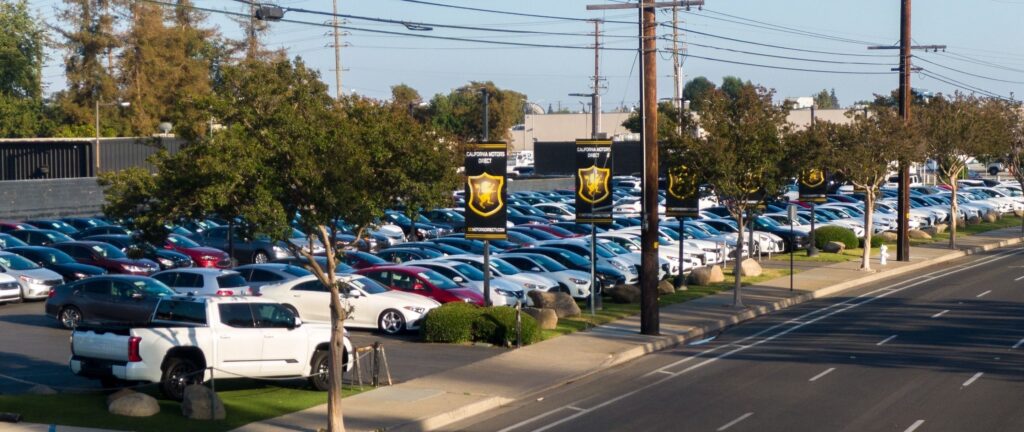
    1. California Motors Direct (Fontana)

    📍 Locations: 15836 Valley Blvd, Fontana, CA 92335

    ⭐ Google Rating: 4.3

    🌐 Website: fontanamotorsdirect.com

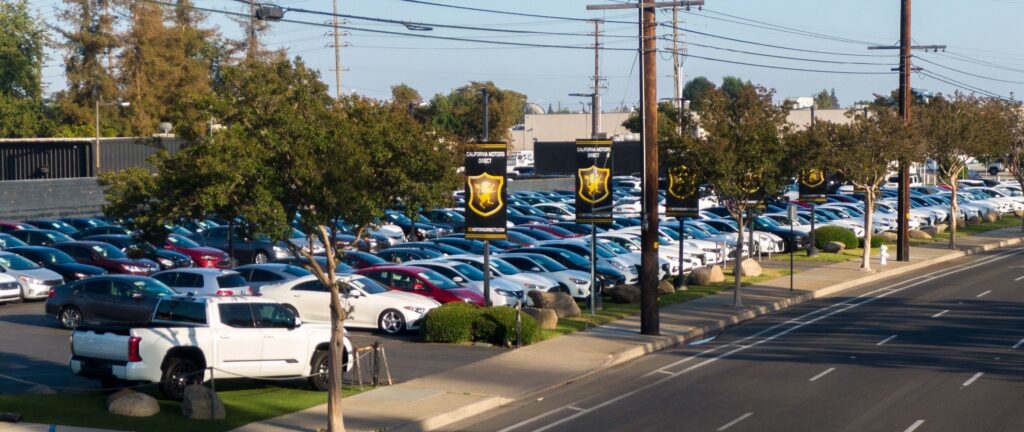
    Fontana Motors Direct Dealership top view

    Why They’re Top-Rated:

    California Motors Direct has earned its reputation as one of the most trusted used car dealerships in Southern California. With a massive selection of certified pre-owned vehicles and hundreds of high-demand models at competitive prices across multiple locations, they offer everything from affordable sedans and SUVs to premium luxury models. Their no-pressure sales environment and strong in-house financing options make them a top choice for car shoppers in the Inland Empire.

    They’re also known for helping customers with credit challenges, offering $0 down financing and flexible loan terms through their strong lender network.

    What They Offer:

    • Inventory updated daily with options for all budgets
    • Clean title guarantees and free CarFax reports
    • In-house financing team to support all credit types
    • Bilingual sales team (English/Spanish)
    • Fast approvals — many buyers drive off the same day

    Best For: Buyers who want wide selection, quick approvals, and flexible pricing without hidden fees.

    2. Pacific Auto Center (Fontana)

    📍 Locations: 16416 Valley Blvd, Fontana, CA 92335

    ⭐ Google Rating: 4.5

    🌐 Website: pacificautocenter.com

    Pacific Auto Center Fontana front dealership view

    Why They’re Top-Rated:

    Pacific Auto Center is one of the largest independent used car dealers in California, and their Fontana location is a magnet for buyers across the state. What sets them apart is their unmatched inventory size, especially in categories like diesel trucks, commercial vans, lifted pickups, and utility vehicles.

    Beyond variety, Pacific Auto Center is praised for their efficient sales process, transparent financing terms, and attention to reconditioning and detail. Whether you’re a contractor, commuter, or family shopper, you’ll likely find what you’re looking for here.

    What They Offer:

    • Inventory of 1,000+ used vehicles across all segments
    • Specializes in trucks, lifted vehicles, and commercial-use models
    • Pre-approval and loan applications available online
    • 3-day return policy for added peace of mind
    • Optional protection plans and GAP coverage

    Best for: Shoppers needing heavy-duty trucks, commercial vehicles, or those who want a massive inventory to choose from in one place.

    3. West Coast Auto Sales (Montclair)

    📍 Locations: 5180 Holt Blvd, Montclair, CA 91763

    ⭐ Google Rating: 4.4

    🌐 Website: westcoastauto.com

    West Coast Auto Sales dealership view

    Why They’re Top-Rated:

    West Coast Auto Sales offers a refined and customer-first approach to the used car buying experience. Unlike high-volume lots that focus on speed and numbers, this dealership prioritizes vehicle quality, condition, and presentation.

    Their indoor showroom, well-maintained cars, and clear documentation make this a favorite for shoppers looking for a boutique dealership experience. They also specialize in clean-title, low-mileage vehicles with strong resale value.

    What They Offer:

    • Carefully curated inventory — not just any car makes the lot
    • Indoor showroom for comfortable viewing
    • CarFax certified vehicles only
    • White-glove sales experience with no pressure
    • Multiple warranty and protection plan options

    Best for: Buyers seeking premium-quality used vehicles in a comfortable, professional environment with personalized service.

    4. Riverside Auto Market

    📍 Locations: 18820 Van Buren Boulevard, Riverside, CA 92508

    ⭐ Google Rating: 4.7

    🌐 Website: riversideautomarket

    Riverside Auto Market dealership

    Why They’re Top-Rated:

    Riverside Auto Market has earned a reputation as one of the Inland Empire’s most honest and community-driven dealerships. While they may not have the massive size of some competitors, they make up for it with exceptional customer care, honest pricing, and quick, no-nonsense approvals.

    Customers frequently mention how easy the process is and how transparent the staff is about pricing and loan terms. Their focus on local buyers, credit-friendly financing, and clean vehicles makes them a smart, low-stress choice.

    What They Offer:

    • Clean inventory, safety-checked and verified
    • Trusted by Riverside locals for no-hassle buying
    • Ideal for first-time buyers or credit-rebuilding shoppers
    • Online approval and payment calculators
    • Straightforward, small-team experience

    Best for: Anyone who wants a simple, fast, and fair deal — especially those who are new to financing or want a more human, less corporate car-buying process.

    5. STG Auto Group (Montclair)

    📍 Locations: 10477 Central Ave, Montclair, CA 91763

    ⭐ Google Rating: 4.6

    🌐 Website: stgautogroup.com

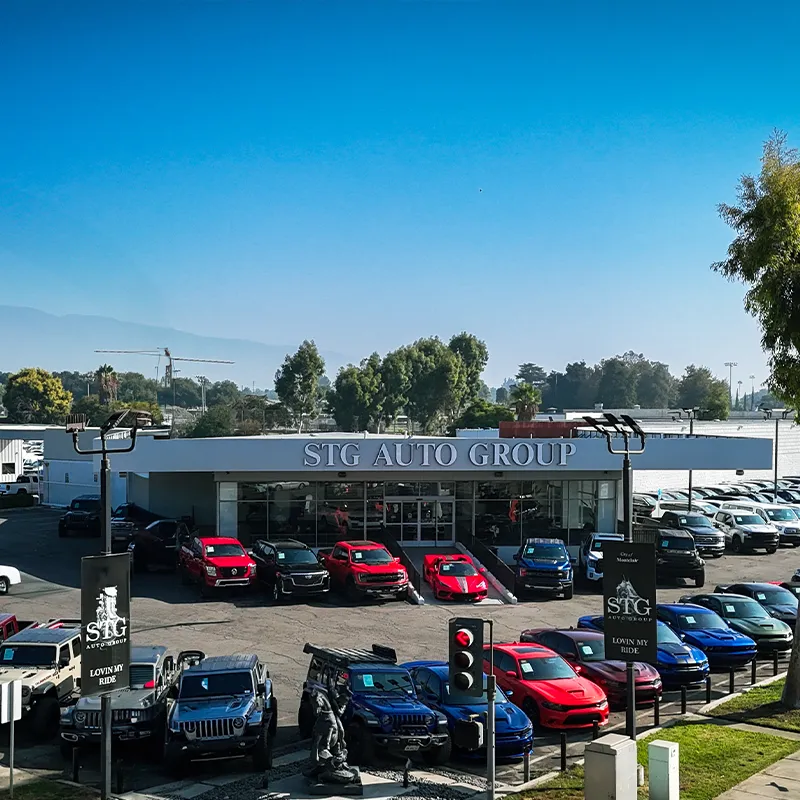
    STG Auto Group Montclair dealership view

    Why They’re Top-Rated:

    With multiple locations in SoCal, STG Auto Group has become a staple in the pre-owned car market — and their Montclair location is a standout for Inland Empire shoppers. STG specializes in late-model vehicles, including luxury, imports, and performance cars like BMW, Mercedes-Benz, Audi, and Tesla.

    Their upscale showroom, no-haggle pricing, and certified pre-owned (CPO) inventory offer a dealership experience that feels closer to new-car retail — without the sticker shock.

    What They Offer:

    • Massive multi-brand inventory including high-end and fuel-efficient models
    • In-house financing, with options for low/no credit buyers
    • Trade-in assistance and instant cash offers
    • Extended warranty packages and vehicle protection plans
    • Indoor showroom with clean, modern facilities

    Best for: Drivers seeking premium used cars in excellent condition, with full financing support and dealership-level service.

    Even with a list of top-rated dealers, here are a few things to keep in mind before making your final decision:

    Read Reviews Carefully

    Read the actual review comments. A 4.5-star dealer with hundreds of recent reviews is more trustworthy than a 5.0 with only 10 reviews. Look for patterns in feedback. Are people mentioning excellent customer service? Are there complaints about hidden fees?

    Check Vehicle History Reports

    A reputable dealer will offer free CarFax or AutoCheck reports. Always verify the title, accident history, and maintenance records.

    Understand Your Financing Options

    Compare dealer financing with your own bank or credit union. Some dealerships offer special programs for first-time buyers or those with less-than-perfect credit.

    Test Drive Multiple Vehicles

    Don’t settle on the first car you see. Try several models and trims to get a feel for what suits your needs and driving style. Drive the car on local streets and the freeway. Listen for unusual noises, test the brakes, and check features like the A/C, lights, and infotainment system.

    Ask About Return Policies or Warranties

    Some top-rated dealerships offer short-term return policies or extended warranties — a sign they stand behind their vehicles.

    MORE: Explore More Tips on Buying a Used Car

    The Inland Empire offers plenty of options when it comes to used car dealerships — but only a few rise to the top. By choosing from this list of top-rated dealerships, you’re setting yourself up for a smoother, safer, and more satisfying car-buying experience.

    Whether you’re buying your first car or upgrading to something newer, remember: it’s not just about the car — it’s about who you buy it from.

  • Used Car Title Transfers in California: A Step-by-Step Guide

    a guide on used care title transfer in california

    Transferring a used car title in California is more than a formality—it’s a legal requirement that safeguards both the buyer and seller. Whether you’re purchasing a vehicle from a private seller, inheriting one from a family member, or gifting it to a loved one, understanding the title transfer process is crucial to avoid fines, delays, or legal issues.

    A vehicle title, commonly known as a “pink slip,” is a legal certificate of ownership issued by the California Department of Motor Vehicles (DMV). It includes critical details like:

    • Registered owner’s name and address
    • Vehicle Identification Number (VIN)
    • Vehicle year, make, and model
    • Odometer reading at the time of transfer (when required)
    • Any existing lienholders (e.g., banks or lenders)
    • Any title branding (e.g., salvage, rebuilt)
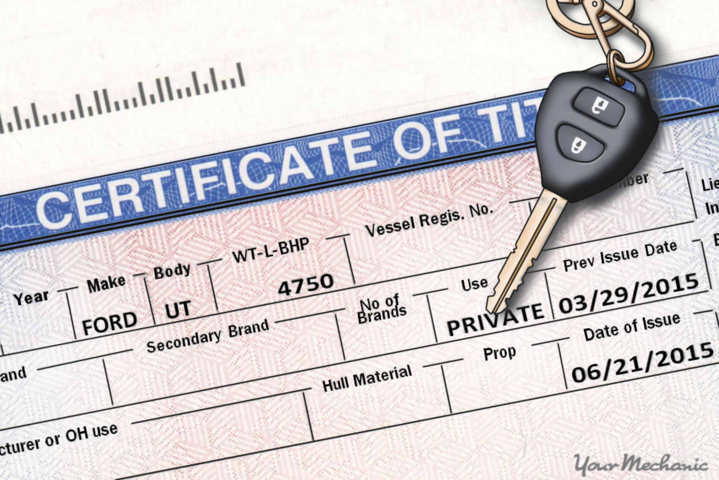
    sample of vehicle title

    Why is this so important? Because in the eyes of the DMV and California law, if your name isn’t on the title, you don’t legally own the vehicle—even if you’ve paid for it in full.

    If you’re a seller, failing to properly transfer the title can leave you liable for tickets, toll violations, or even criminal incidents involving the car after the sale. If you’re a buyer, not securing the title means you can’t register or legally operate the car in your name.

    In California, any change in ownership must be documented with a title transfer, and it must be done within a tight timeframe. The following situations all require a title transfer through the DMV:

    • Purchasing or selling a used vehicle
    • Gifting a vehicle to a relative or friend
    • Donating a vehicle to a nonprofit or charity
    • Inheriting a vehicle after the owner’s death
    • Paying off a car loan (removing the lienholder)
    • Transferring ownership between spouses or domestic partners

    ⚠️ Important: California gives buyers 10 calendar days to complete the transfer after the purchase. The seller must submit a Notice of Transfer and Release of Liability (NRL) within 5 days of the sale.

    Private sales are incredibly common in California, especially through platforms like Craigslist, Facebook Marketplace, or OfferUp. But they can also be the most error-prone if you don’t understand what’s required.

    car for sale sign

    Step 1: Review the Title

    The seller must provide a valid, original California Certificate of Title. It should show no lienholders or indicate that any existing lien has been paid off. If the title is lost, the seller must file a Duplicate Title (REG 227) before proceeding.

    Step 2: Fill Out the Title

    The seller must fill out the “Transfer of Title” section, which includes:

    • Buyer’s full legal name and address
    • Odometer reading at the time of sale (required if vehicle is under 10 years old)
    • Date of sale
    • Signatures from both the buyer and seller

    Be meticulous—any strike-throughs or smudges may invalidate the document.

    ⚠️ Tampering with the odometer reading or skipping this step may result in criminal penalties under federal and California law.

    Step 3: File a Bill of Sale (Optional but Recommended)

    While not legally required, a Bill of Sale (Form REG 135) protects both parties. It documents the agreed-upon sale price, date, and vehicle details. If a dispute arises later, this is your proof.

    Step 4: Seller Submits the Notice of Transfer and Release of Liability

    The seller must notify the DMV of the ownership change by submitting Form REG 138 within 5 calendar days of the sale. This protects the seller from future liability (tolls, tickets, accidents).

    Step 5: Smog Check Requirements

    smog check

    In most private sales, the seller is responsible for providing a current smog certification if the vehicle is more than four model years old.

    • Smog tests are valid for 90 days
    • Exemptions include electric vehicles, hybrids (in some cases), and diesel-powered cars under specific conditions.

    💡 Fact Check: See Smog Information – DMV for current test exemptions and requirements.

    Step 6: Buyer Submits Paperwork and Pays Fees

    The buyer must visit a DMV office or use an authorized provider to submit:

    • The signed title
    • Completed Application for Title or Registration (REG 343)
    • A valid smog certificate (if applicable)
    • Proof of insurance
    • Payment for title transfer fee, registration, and use tax

    This should be done within 10 days of the purchase. If the car isn’t currently registered, it may need a temporary operating permit while everything is processed.

    MORE: Check for Any Damages Before Buying From Private Sales

    Title transfers in California aren’t free, but they’re relatively inexpensive—unless you miss a deadline.

    Base Fees (as of 2025):

    • Title Transfer Fee: $15
    • Use Tax: Varies by county and vehicle value
    • Smog Transfer Fee (if not already paid): Around $50
    • Duplicate Title (if needed): $23
    • Late Penalties: Start at $25 and can climb significantly

    Remember, even gifts or family transfers may still be subject to a use tax unless properly documented. Always ask for itemized receipts or confirmations of payment for your records.

    💡 You can use the DMV Fee Calculator to helps determine the total registration and transfer costs.

    If purchasing from a licensed California dealership, things are a bit easier for the buyer. The dealer is required by law to process the title transfer and registration on the buyer’s behalf.

    california motors direct

    This means:

    • Paperwork and submission of all documents to the DMV.
    • New registration and title will be mailed directly to the buyer.
    • Smog and inspections are handled in-house.
    • Sales tax is collected and remitted by the dealer.

    That said, don’t assume everything will be perfect. Always double-check that the name and address on the title application is correct, and ask for a copy of all documents submitted to the DMV. Dealership errors, while rare, can delay the registration for weeks or months.

    MORE: Get Pre-Approved Today

    👨‍👩‍👧 Family Transfers

    Transferring a car between close family members (spouse, domestic partner, parent, child, grandparent, or grandchild) often qualifies for a use tax exemption. You’ll still need to submit the proper forms (REG 343 + REG 256 Statement of Facts), and a smog check may still be required unless an exemption applies.

    🎁 Gifts

    If giving or receiving a car as a gift (no money exchanged), fill out the REG 343 + REG 256 form to declare the gift status. This helps exempt from the use tax, but are still subject to other registration and title fees.

    📜 Inheritance Transfers

    Vehicles transferred due to death can usually be done without probate if the estate is small. You’ll need:

    • A death certificate
    • REG 5 (Affidavit for Transfer Without Probate)
    • Proof of your relationship to the deceased

    In most cases, the smog certification requirement is waived.

    For larger estates, you may need court documents and a transfer through the estate executor.

    Many Californians overlook key aspects of the title transfer process—resulting in denied applications, fines, or legal risks. Here are a few things that absolutely should not be ignore:

    • Verify the VIN on the title, dashboard, and registration card. They must match exactly.
    • Double-check odometer accuracy, especially if the vehicle is under 10 years old.
    • Do not buy a car without a title—even if the seller promises to “mail it later.”
    • Never sign a blank title as a buyer. That opens the door for title washing or fraud.
    • If you’re dealing with a salvage or rebuilt title, make sure you understand the insurance limitations and resale challenges.

    MORE: What to Know When Buying a Used Car

    California offers multiple ways to submit your paperwork, depending on your preference and situation:

    1. In-Person at DMV Offices – Schedule an appointment online at dmv.ca.gov for faster service.
    2. DMV Business Partners (like AAA) – Often quicker, with shorter lines, but not all services are available.
    3. By mail or through the DMV Online Portal

    Just remember: mail-in processing can take 4 to 6 weeks, so if in a hurry, opt for in-person or third-party services.

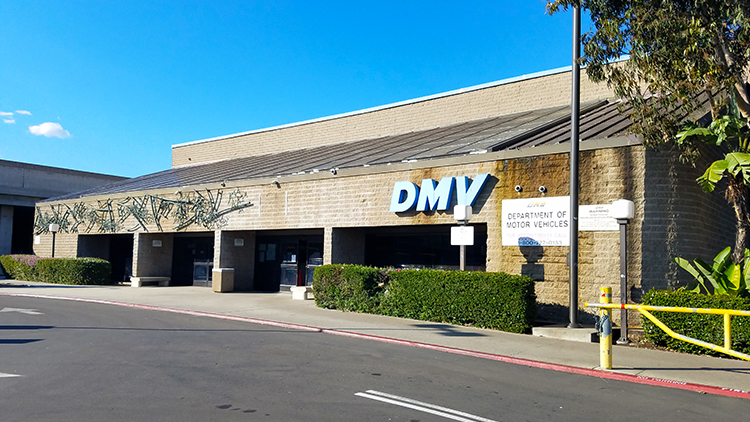
    california dmv

    California’s title transfer process may seem like a hassle, but it’s your legal shield against fraud, liability, and ownership disputes. If done right, it’s seamless. If done wrong, it can cost you time, money, and in some cases—legal trouble.

    Take your time. Ask questions. And never assume someone else has “handled it.” When it comes to car titles, what’s on paper is what the DMV believes.

    Can I buy or sell a car without a title?

    No. California law requires a valid title to legally transfer ownership. If the title is lost, the seller must request a duplicate before the sale.

    Can I transfer a vehicle if I still owe money on it?

    Only if the lienholder releases interest in writing. The DMV won’t transfer the title until the loan is paid off.

    Is notarization required?

    No. California does not require notarization for private party title transfers.

    How do I check if the title is clean or salvaged before buying?

    You can request a Vehicle History Report from services like Carfax or AutoCheck. Alternatively, visit the DMV’s Vehicle Registration Status page and enter the VIN to verify title status.

  • No Money Down, No Problem: How to Drive Off Today with $0 Down

    Guide on how to drive off with no money down

    A big cash down payment often stops people from getting the car they need—but what if you could skip it altogether? With the right financing strategy, it’s possible to drive off the lot with $0 down. These offers are more common than you think and available to many types of buyers—not just those with perfect credit.

    Zero-down deals can be tempting, but knowing when they truly benefit you—and how to avoid getting stuck with hidden costs—can make all the difference.

    In car financing, “$0 down” typically means you’re not making a down payment toward the vehicle’s price at signing. However, this does not always mean “no money due at all.”

    Here’s how it usually breaks down:

    • No down payment is required (the portion that reduces your loan amount)
    • Taxes, title, license, registration, and doc fees may still be due at signing
    • In some promotions, “$0 due at signing” includes all of the above—but this applies mostly to leases or very specific finance deals for well-qualified buyers

    Clarification: Most buyers will still need to pay government-mandated fees and sales tax unless those are explicitly rolled into the loan or waived through promotions.

    Zero-down financing is both real and commonly offered—particularly during special promotions or by lenders willing to cover the entire cost of the transaction.

    Zero down car promotion

    However, whether you qualify—and how favorable the terms are—depends on several factors:

    • Your credit score and credit history
    • Income verification
    • Vehicle selection and lender guidelines
    • Loan-to-value (LTV) ratio: The total loan amount vs. the car’s actual value

    Lenders calculate risk based on these inputs. Financing the entire cost of the car, including taxes and fees, increases risk—so expect more scrutiny or higher interest if you don’t make a down payment.

    Advantages:

    • No large upfront cost — You keep your savings for other expenses
    • Faster purchase process – You don’t need time to save for a down payment
    • Useful for emergencies — Ideal if your car was totaled, stolen, or you urgently need transportation
    • Builds credit — As long as you make on-time payments, your auto loan can improve your credit history

    Disadvantages:

    • Higher monthly payments — You’re financing a bigger amount
    • More total interest paid — Especially if you choose a longer-term loan
    • Risk of negative equity — You may owe more than the car is worth in the early months of the loan (known as being “upside down”)
    • Limited qualification — Offers are often reserved for buyers with decent to strong credit

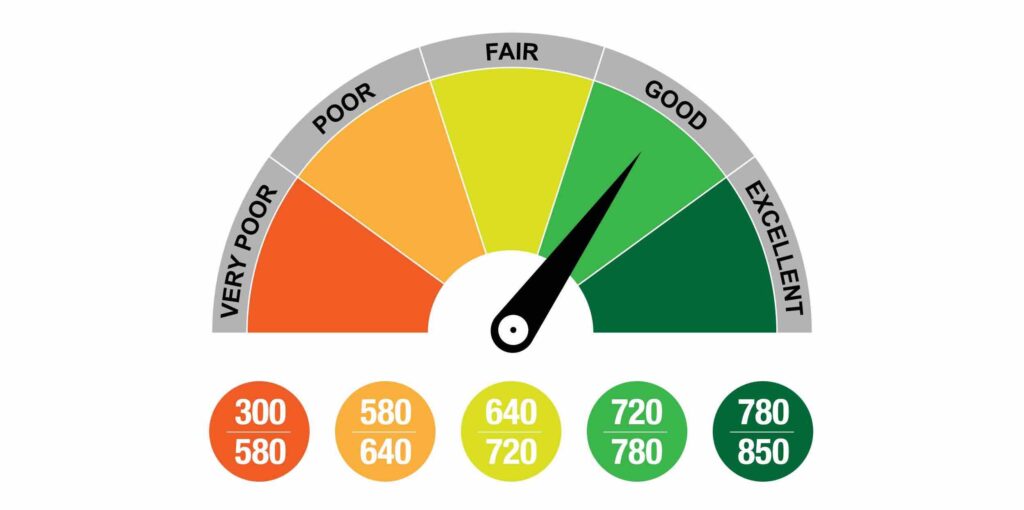
    MORE: Explore the Credit Score Required to Buy a Car

    Contrary to popular belief, you don’t need perfect credit to qualify. However, the better your financial profile, the easier it will be to get approved without needing cash up front.

    Here’s what most lenders consider:

    Stronger Applicants (Easiest Approval):

    Buyers in this category usually have a clean credit history and strong financial footing. Dealerships and Lenders view these borrowers as low-risk, making them ideal candidates for $0 down programs—often with favorable terms like low interest rates or shorter loan durations.

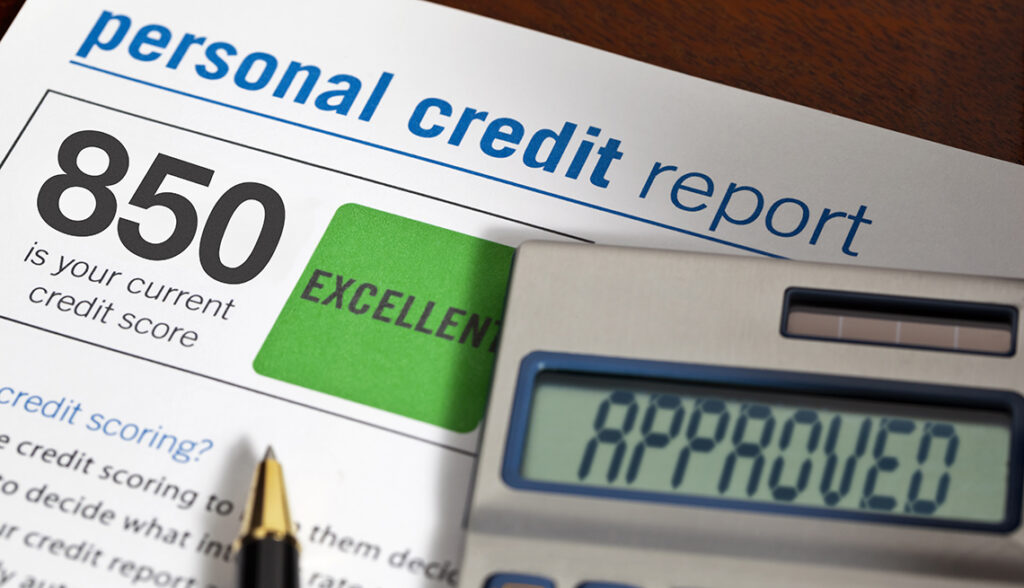
    Approved for loan with a credit score of 850

    These buyers typically have:

    • Credit score of 670 or higher (Prime or Super Prime tier)
    • Low debt-to-income ratio (DTI), showing manageable financial obligations
    • Stable, verifiable employment, often with several years at the same job
    • Previous auto loan history with on-time payments or an existing paid-off car loan

    They are the most likely to be approved for true $0 down financing, including offers that roll taxes and fees into the loan.

    🟡 Moderate Credit (Possible Approval):

    Buyers in this range – typically between 580 and 669 – may not have perfect credit, but their financial behavior shows promise. They might have had a late payment in the past or carry higher debt loads—but they’re not considered high risk.

    A fair credit score of 580-669

    Lenders may still offer $0 down to these borrowers, especially if they’re able to:

    • Provide proof of steady income
    • Offer trade-in equity to reduce the loan amount
    • Finance a less expensive vehicle
    • Agree to slightly higher interest rates or longer loan terms

    These buyers might also be approved with conditions, such as a co-signer or a small upfront payment to cover fees.

    🔴 Subprime Credit (Approval with Conditions):

    Buyers with lower credit scores—typically under 580—are often considered subprime or high-risk borrowers. While $0 down is harder to get in this tier, it’s not impossible. Many dealerships, especially those with special finance programs or in-house financing (like Buy Here Pay Here), work with subprime lenders to offer flexible options.

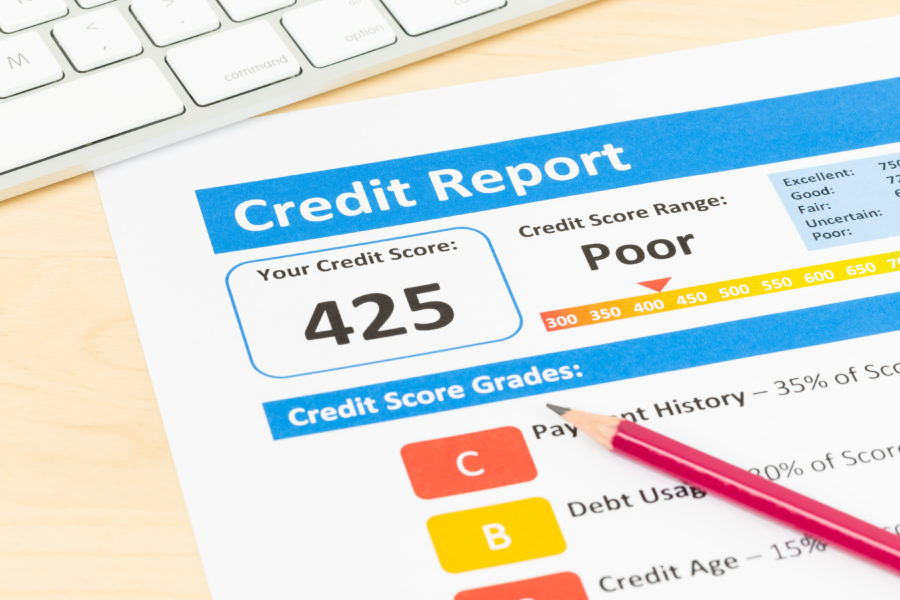
    Poor credit score report of 425 with pen and keyboard

    However, expect to:

    • Pay higher interest rates (often 15% or more)
    • Be limited to certain vehicles, usually older or lower-priced models
    • Provide extensive documentation, including proof of residence, income, references, and sometimes insurance verification
    • Potentially need a co-signer or trade-in vehicle to offset the lack of a down payment

    Some subprime lenders may approve zero-down loans by adjusting the terms to account for the higher risk, such as shortening the loan duration or increasing the monthly payment.

    💡 Important: Always confirm that the lender reports your payments to the major credit bureaus. This is crucial if you’re using the loan to rebuild your credit over time.

    MORE: Learn How to Buy a Car with Bad Credit

    1. Franchise Dealership Promotions

    Franchise dealerships (those affiliated with major automakers like Toyota, Honda, Ford, Hyundai, and others) frequently run promotional events offering $0 down as part of a larger sales campaign. These offers are often seasonal or tied to specific sales periods like holiday weekends, end-of-year clearance events, or new model releases.

    What to know:

    • These deals are usually available only to well-qualified buyers with strong credit scores (typically 660+).
    • Even if the ad says “$0 down,” the offer may still require you to pay taxes, title, and registration unless explicitly stated otherwise.
    • Promotions may be limited to specific vehicles, such as entry-level trims, older inventory, or models the dealership is trying to move quickly.

    Franchise dealers can offer flexible lender options, especially if you’re pre-approved or trading in a vehicle with equity.

    2. Manufacturer-Sponsored Programs

    Automakers themselves often run nationwide $0 down financing or lease specials through their captive financing companies (e.g., Toyota Financial Services, Ford Credit, Honda Financial Services). These deals are usually advertised online and through local dealers, often during promotional events.

    a hanging toyota financial services sign

    What to know:

    • Lease deals may advertise “$0 due at signing”, which can cover everything—including your first payment, security deposit, and registration—but only for top-tier credit customers.
    • Purchase offers with $0 down are less common than lease specials, but they do exist, often paired with low-APR financing or cash-back incentives.
    • Approval requires excellent credit, often 700+, and verifiable income.

    These offers are ideal if you want a new vehicle with full warranty coverage, low maintenance costs, and the flexibility of a lease.

    3. Credit Unions and Local Banks

    Many California-based credit unions, such as Golden 1 Credit Union, SchoolsFirst FCU, and Patelco, offer zero-down auto loans for members in good standing. Unlike dealer promotions, these offers are often available year-round and may come with lower interest rates and fewer restrictions.

    patelco credit union logo

    What to know:

    • You typically need to be a member of the credit union, but membership is often open to anyone who lives or works in certain counties.
    • Credit unions evaluate more than just your credit score—they also consider your overall banking relationship and financial behavior.
    • Many allow you to finance taxes, registration, and fees into the loan, making true $0 out-of-pocket possible.

    Credit unions are a smart choice for buyers with good credit who want personalized service and transparent lending terms.

    4. Buy Here Pay Here Dealerships (BHPH)

    Buy Here Pay Here dealerships offer in-house financing, meaning the dealer itself acts as the lender. These dealerships often advertise $0 down and guaranteed approval, especially for buyers with poor or no credit.

    What to know:

    • These dealerships usually don’t require credit checks, making them appealing to buyers with recent bankruptcies, repossessions, or low scores.
    • Interest rates are typically much higher than traditional lenders—sometimes exceeding 20% APR.
    • You may be required to make weekly or bi-weekly payments, and the selection of vehicles is often limited to older models.
    • Some BHPH dealers do not report payments to credit bureaus, which means your on-time payments may not help rebuild your credit.

    BHPH dealers can be a useful short-term solution for buyers in tough situations, but it’s important to read the fine print and confirm that the loan terms are manageable.

    MORE: Explore the Best Time to Purchase a Car

    Here’s how to improve your approval chances:

    1. Check Your Credit Score – Use free services like Credit Karma or check directly with Experian, TransUnion, or Equifax.
    2. Get Pre-Qualified – Pre-qualification shows what you’re eligible for, without affecting your credit. It also gives you negotiation leverage at the dealership.
    3. Have Documents Ready:
      • Income (recent pay stubs or bank statements)
      • Insurance
      • Residence
      • Employment
    4. Use Trade-In Equity Wisely – If your current car has equity, this can reduce the amount financed, even if you put no cash down.
    5. Consider a Co-Signer – A strong co-signer can dramatically improve your loan terms and approval odds.

    MORE: Here’s How to Get a Car Loan With No Credit History

    If your priority is low upfront cost and you’re confident in your ability to handle monthly payments, a $0 down car loan or lease can be a smart choice. But you must understand the trade-offs:

    • You’ll likely pay more over time
    • You may be restricted to certain vehicles or lenders
    • Your credit profile plays a major role in eligibility

    Do your research, understand the terms, and don’t be afraid to walk away from a deal that doesn’t feel right.

    Can I refinance a $0 down auto loan later?

    Yes. If your credit improves, refinancing can help lower your interest rate and monthly payment. Just check for prepayment penalties in your original loan.

    Can I trade in a car I still owe money on and get $0 down?

    If your trade has positive equity, it can help cover the down payment. If you’re upside down, the negative equity may need to be rolled into your new loan.

    Will applying for multiple $0 down loans hurt my credit?

    If done within a 14–45 day window, multiple inquiries count as one. Use soft credit pull pre-approvals when possible to avoid impact.

    Does $0 down impact my car insurance?

    Not directly. But full coverage is required for financed cars, and some lenders may require GAP insurance to protect against negative equity.

  • What Credit Score Do You Need to Buy a Car in California?

    Image with title and credit score rating graphic

    Whether you’re buying your first car or upgrading to a newer model, understanding how your credit score affects your ability to finance a vehicle in California is essential. Your credit score doesn’t just determine whether you get approved—it also impacts your interest rate, down payment, and loan terms.

    Let’s walk through everything you need to know about credit scores and car buying in California—what’s considered a good score, what you can qualify for at different levels, and how to improve your financial standing before applying for a loan.

    Your credit score is a three-digit number that tells lenders how reliable you are at repaying borrowed money. In the eyes of banks, credit unions, and finance companies, your score reflects your financial behavior.

    Lenders group credit scores into different tiers, and these tiers affect the interest rate you’ll receive. Higher credit scores signal that you’re a low-risk borrower. As a result, lenders will likely offer you:

    • Lower interest rates
    • More flexible loan terms
    • Lower down payment requirements
    • Approval for higher vehicle price ranges

    On the other hand, if your score is lower, you may still get approved—but expect less favorable terms and higher monthly payments.

    There’s no official minimum credit score to buy a car in California. However, here’s what most buyers can expect based on their credit:

    Good Credit (661 and above)

    credit score range showing arrow pointing at good credit score

    If your score is 661 or higher, you’re in a favorable position and will likely qualify for the lowest available interest rates. Many buyers in this range secure financing without needing a large down payment and have access to new cars, certified pre-owned vehicles, and promotional offers.

    ⚠️ Fair Credit (600–660)

    Between 600 and 660, you can still qualify for financing, but lenders may see you as a moderate risk. Expect higher rates and possibly a requirement for a larger down payment. You may have fewer options when it comes to loan terms or vehicle selection.

    • Loan Approval: Possible, with higher APR
    • Interest Rates: Moderate to high
    • Down Payment: Often required
    • Best For: Reliable used cars or entry-level new vehicles

    Bad Credit (below 600)

    Even with a credit score under 600, you can still qualify for financing—particularly in California, where many lenders and dealerships offer programs tailored for credit-challenged buyers. However, interest rates will be significantly higher, and you’ll often need to make a substantial down payment to secure a loan.

    • Loan Approval: Possible through subprime lenders
    • Interest Rates: Very high
    • Down Payment: Typically required (10%–20%)
    • Best For: Budget used cars, “Buy Here Pay Here” lots, or special financing programs

    MORE: How to Buy a Car with Bad Credit

    Your credit score doesn’t just determine whether you’ll get approved for a car loan—it plays a major role in how much you’ll pay every single month. Even a difference of 50–100 points in your score can lead to thousands of dollars in savings or added cost over the life of the loan.

    a person adding a card to their car payment

    Let’s break it down using a $25,000 loan financed over 60 months (5 years):

    661 and Above (Good to Excellent Credit)

    With a top-tier credit score, you’re likely to qualify for the lowest available interest rates, often between 4% and 6% (depending on the lender and vehicle).

    • Estimated APR: 5.0%
    • Monthly Payment: Around $472
    • Total Interest Paid: Approximately $3,320 over 5 years

    This gives you the power and flexibility to negotiate better terms, choose from more lenders, and potentially put less money down while still enjoying affordable payments.

    ⚖️ 600–660 (Fair to Moderate Credit)

    With a mid-range credit score, you’re not considered high-risk, but you may still face moderate interest rates—typically between 8% and 12%, depending on the lender.

    • Estimated APR: 9.5%
    • Monthly Payment: Around $525
    • Total Interest Paid: Approximately $6,500

    Here, you’re still in a position to qualify for traditional auto loans, but the cost of borrowing is noticeably higher. Over five years, you could pay about double the interest compared to someone with a score of 661 or higher.

    Below 600 (Poor Credit)

    When your credit dips below 600, lenders typically consider you a higher-risk borrower, which means steep APRs ranging from 15% to 20% or more.

    • Estimated APR: 16.0%
    • Monthly Payment: $608
    • Total Interest Paid: $11,480

    That’s more than $8,000 in extra interest compared to someone with a strong credit score. In many cases, lenders may also require a larger down payment, proof of steady income, or a co-signer.

    MORE: What to Know Before Committing to a Used Car

    If you have no credit history—meaning you’ve never used a credit card or taken out a loan—you’re considered an “unscorable” borrower. Lenders won’t have any data to predict your repayment behavior. Still, this doesn’t automatically disqualify you from getting a loan.

    In California, many dealerships and credit unions offer first-time buyer programs tailored to individuals with no credit. These programs often require:

    • Proof of steady income
    • Verification of employment
    • A larger down payment
    • Possibly a co-signer with stronger credit

    MORE: Explore Additional Tips on Purchasing with No Credit History

    Improving your credit score—even by 20 to 40 points—can open the door to better rates and bigger savings. Here are five steps you can take:

    graphic showing a person increasing their credit score and being free

    1. Check Your Credit Report for Errors

    Visit AnnualCreditReport.com and review your report from all three major bureaus. Dispute any inaccurate information, especially missed payments or incorrect account balances.

    2. Pay Down Revolving Debt

    Credit utilization accounts for about 30% of your credit score. Aim to keep your usage under 30%, and under 10% if you want optimal results. Paying down credit cards can boost your score quickly.

    3. Make Payments on Time

    On-time payment history is the most important factor in your score. It makes up about 35% of your credit score. Set up autopay for credit cards and loans to avoid late payments.

    4. Avoid New Credit Applications

    Every new credit inquiry can temporarily drop your score. Avoid opening new accounts in the months leading up to your car purchase.

    5. Build Credit Strategically

    Consider a secured credit card or a credit-builder loan from a credit union to demonstrate responsible borrowing habits.

    Dealership Financing

    california motors direct

    Most car dealerships work with a network of lenders—including banks, credit unions, and specialized auto finance companies. This makes it easy to compare multiple offers in one place. Some dealerships also have special finance departments that focus on helping buyers with bad credit or no credit history.

    Credit Unions

    Local institutions like Golden 1 Credit Union, SchoolsFirst FCU, or Navy Federal tend to offer lower interest rates than big banks. They often have more flexible lending criteria and may be more willing to work with moderate credit scores.

    Online Lenders

    Platforms like Capital One Auto Navigator, Carvana, and AutoPay let you pre-qualify for financing online—without affecting your credit. This gives you a clear idea of your budget before you even step into a dealership.

    Buy Here Pay Here Dealerships

    These lots finance customers directly, without involving outside banks. They typically approve almost anyone, regardless of credit score. However, interest rates are often very high, and some may not report payments to credit bureaus—limiting your ability to rebuild credit.

    Always read the fine print and ask questions before committing to any financing offer.

    While your credit score can impact your loan options, the good news is that you don’t need a perfect credit to drive off in the car you need. California offers flexible programs for buyers across all credit tiers, and with a little preparation, you can position yourself to get better rates and more choices.

    If your score is already strong, use that to your advantage by comparing multiple lenders and negotiating terms. If you’re rebuilding or starting from scratch, focus on progress and work with dealerships or credit unions that understand your situation.

    Every on-time payment after you purchase will help strengthen your credit for the future.